Golden Almond Sablé Cookies (One-Bowl Recipe)
Golden almond sablé cookies are the buttery, melt-in-your-mouth treat that looks fancy enough for a gift box but comes together in one bowl with no fancy techniques. Ground almonds and a whisper of vanilla sugar create a tender crumb, while an egg white glaze gives them that signature golden shine. With four kids at home, I need cookies that bake up reliably and disappear just as fast-and these sablé cookies do both, every single time. The recipe yields enough to keep everyone happy and still have a tin left over for unexpected visitors.
Why You’ll Love These Golden Almond Sablé Cookies
- Buttery and tender: Ground almonds replace some flour, creating a delicate crumb that dissolves on your tongue-classic sablé texture without the fuss.
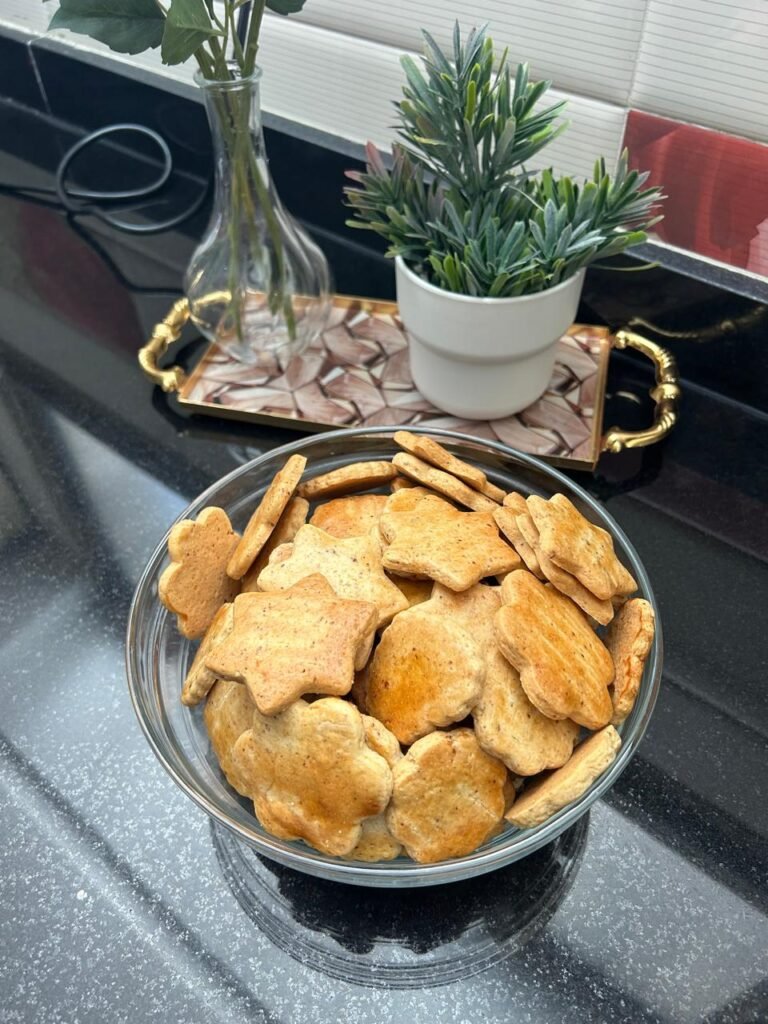
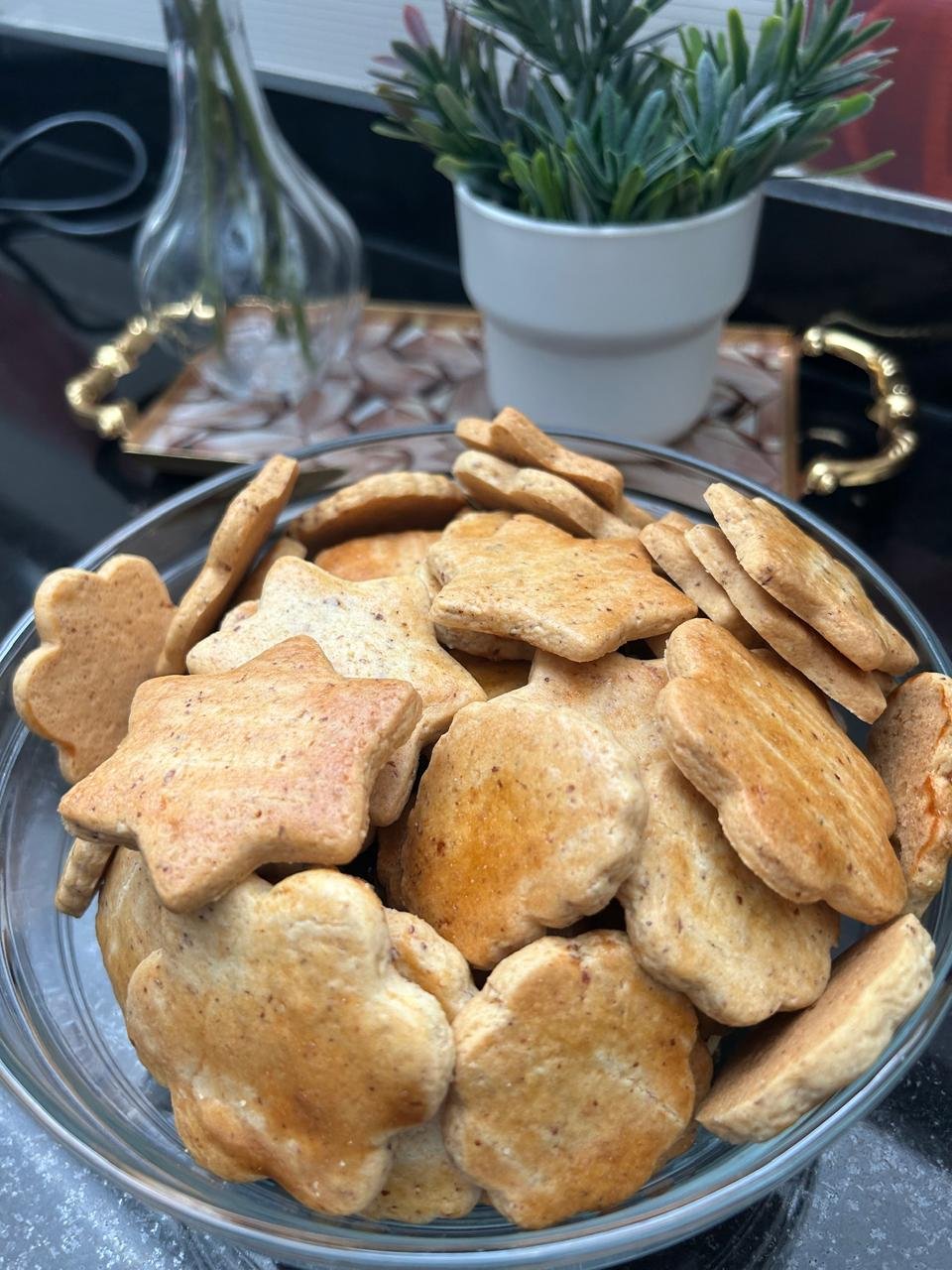
- Elegant presentation: Cut into stars, flowers, or any shape you like, then brush with egg white for a professional golden finish. They look homemade but refined.
- One-bowl simplicity: No mixer, no multiple steps. Cream butter and sugar, add eggs, fold in almonds and flour, roll and cut. That’s it.
- Make-ahead friendly: Dough chills beautifully in the fridge for up to 3 days, or baked cookies keep crisp for a week in an airtight container.
Ingredient Notes
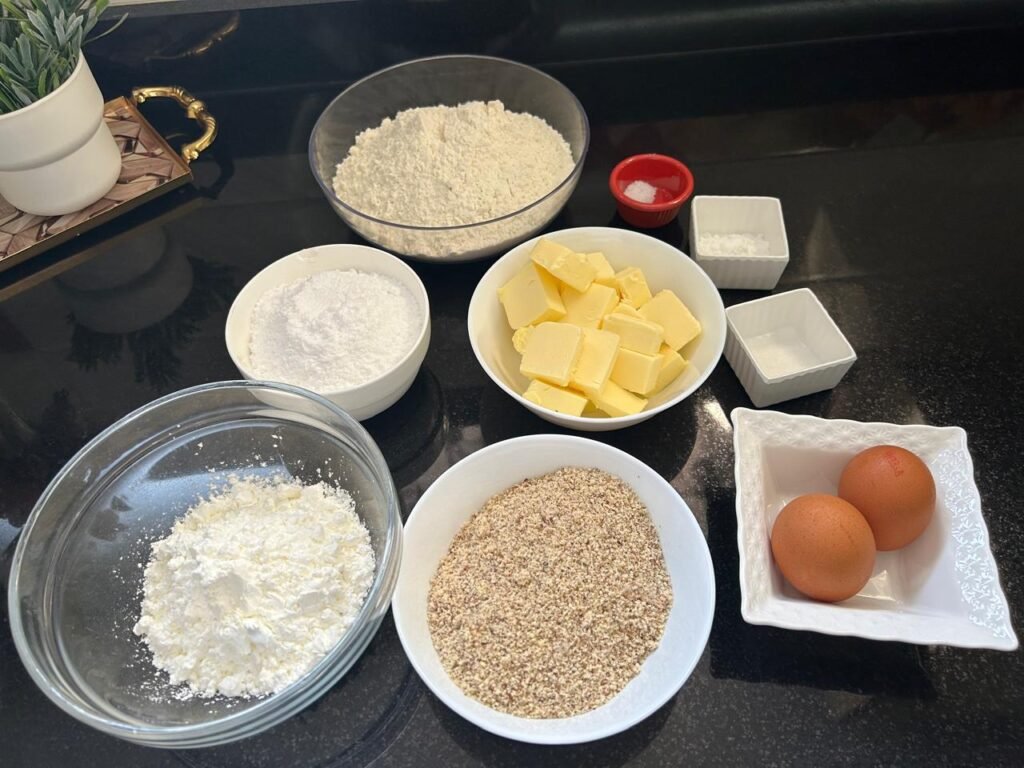
| Ingredient | What to Know |
|---|---|
| Soft butter, ⅞ cup (200g, room temperature) | Room-temperature butter creams smoothly without overworking. If your kitchen is cold, warm the bowl with hot water first. Do not use cold or melted butter-the texture won’t be right. |
| Powdered sugar, 1¼ cups | Measure by spooning and leveling, not packing. Powdered sugar dissolves into the butter faster than granulated, creating that signature sablé tenderness. |
| Ground almonds, 1 cup | Use finely ground almond flour (not almond butter). Store in the fridge after opening to prevent rancidity. Bob’s Red Mill and King Arthur are reliable brands. |
| Cornstarch, ¾ cup | This is crucial-it reduces gluten development and makes the cookies melt-in-your-mouth tender. Don’t skip it or reduce the amount. |
| Egg white glaze (1 egg white, beaten) | Brush lightly onto unbaked cookies before baking. Too much and they’ll get sticky; too little and you lose the golden shine. A thin, even coat is perfect. |
How to Make Golden Almond Sablé Cookies – Step by Step
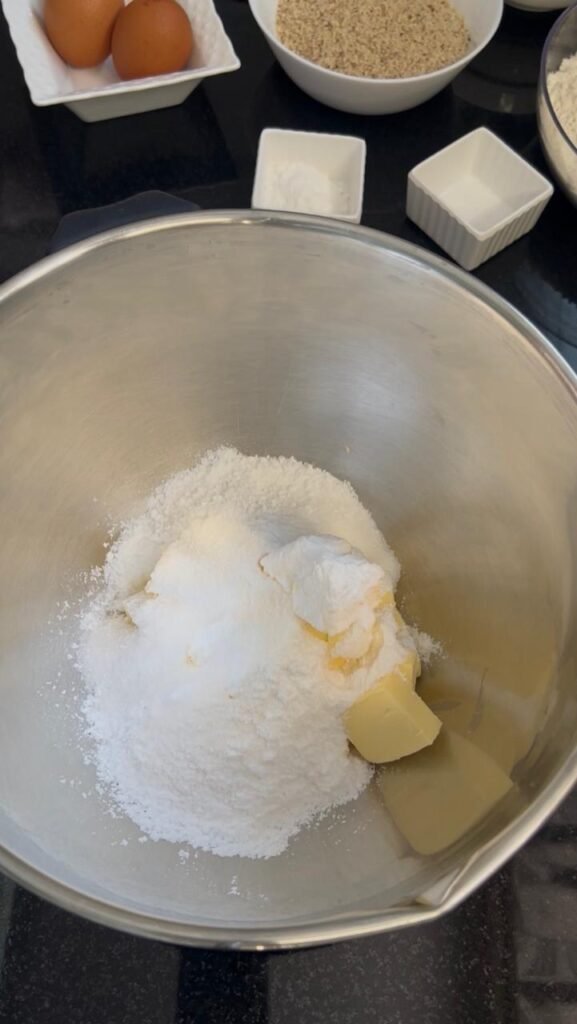
Step 1: Cream butter and sugar. In a large bowl, combine the ⅞ cup soft butter, pinch of salt, 7g vanilla sugar, and 1¼ cups powdered sugar. Mix and work them together thoroughly for about 2-3 minutes until pale, light, and fluffy. This step is crucial-you’re aerating the mixture, which helps the cookies bake tender. (See photo)
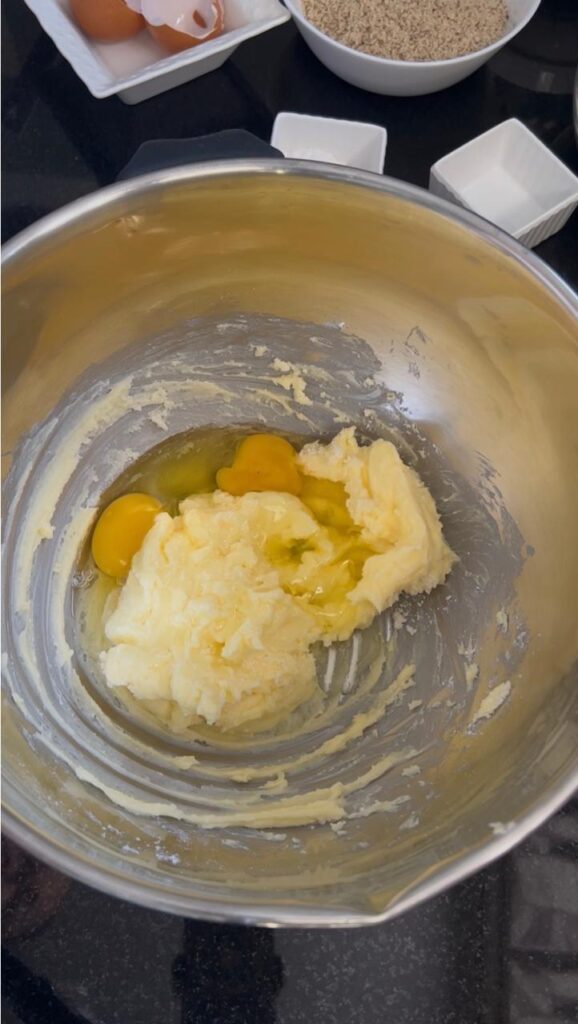
Step 2: Add eggs. Crack in the 2 large eggs and continue mixing well into the butter mixture until smooth and creamy. Take your time here-the eggs should be fully incorporated, with no streaks of yolk visible. The mixture will look slightly looser but should still hold together. (See photo)
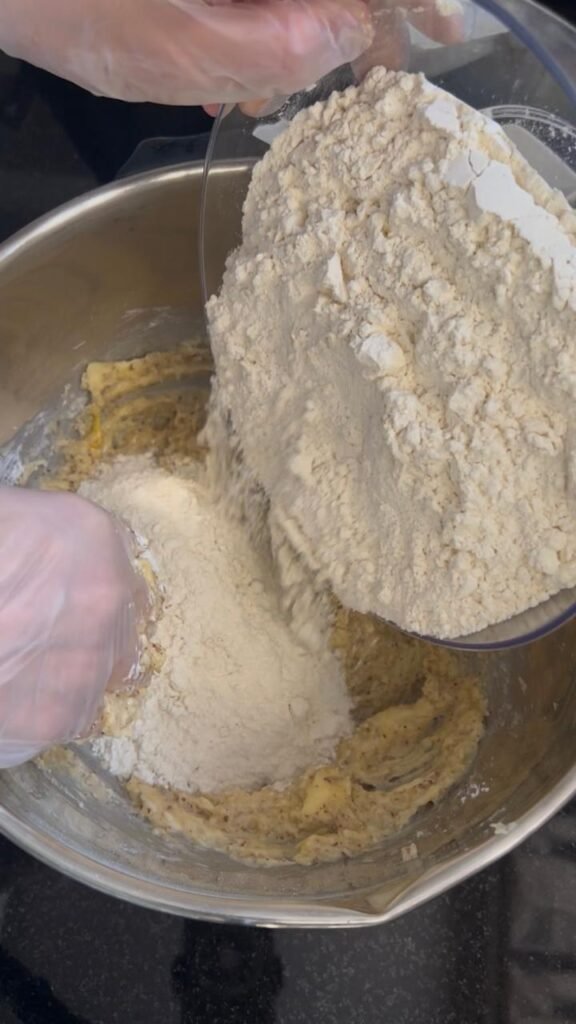
Step 3: Incorporate almonds, starch, and flour. Add the 1 cup ground almonds, ¾ cup cornstarch, and 3¼ cups all-purpose flour in portions, kneading gently with your hands or a wooden spoon until a soft, cohesive cookie dough forms. Don’t overmix-you’re not making bread. The dough should come together but still feel tender and slightly fragile. (See photo)
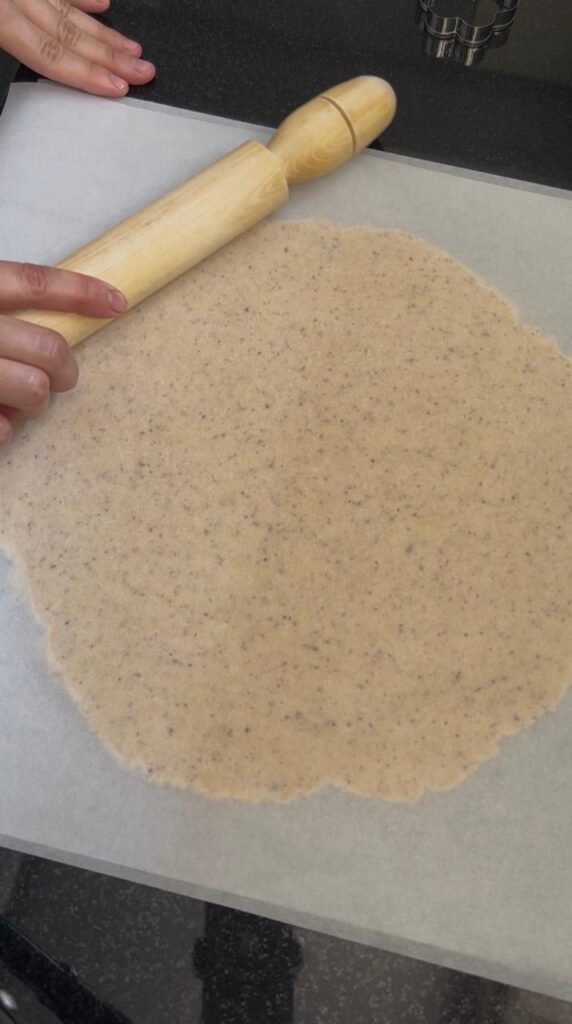
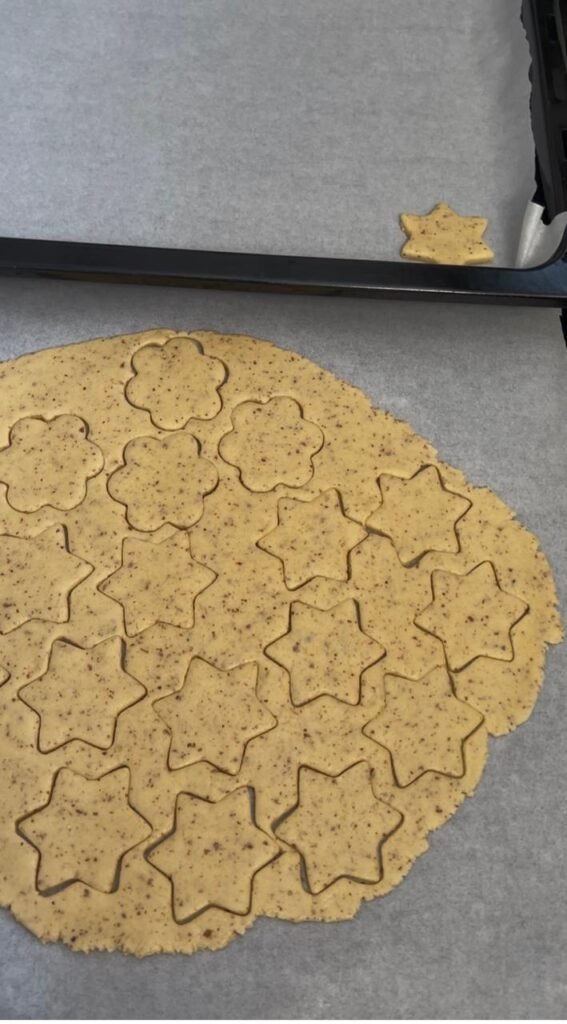
Step 4: Roll and cut. Place the dough onto parchment paper, cover with another sheet of parchment on top, and roll it out evenly to about ¼ inch thick. The parchment on top prevents sticking without adding extra flour (flour toughens sablé cookies). Use cookie cutters to cut out shapes-stars, flowers, or simple rounds all look beautiful. (See photo)
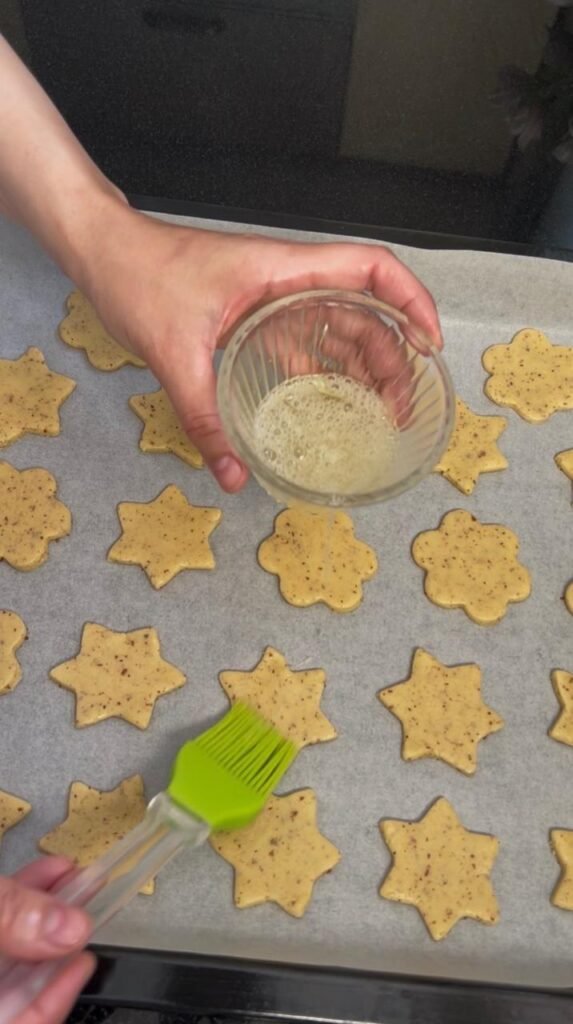
Step 5: Arrange and brush. Transfer the cut cookies to a baking sheet lined with parchment paper, spacing them about 1 inch apart. Lightly brush the tops with the 1 beaten egg white using a soft pastry brush. The egg white won’t just glaze them-it creates that signature golden, slightly shiny finish that makes these cookies look like they came from a French patisserie. (See photo)
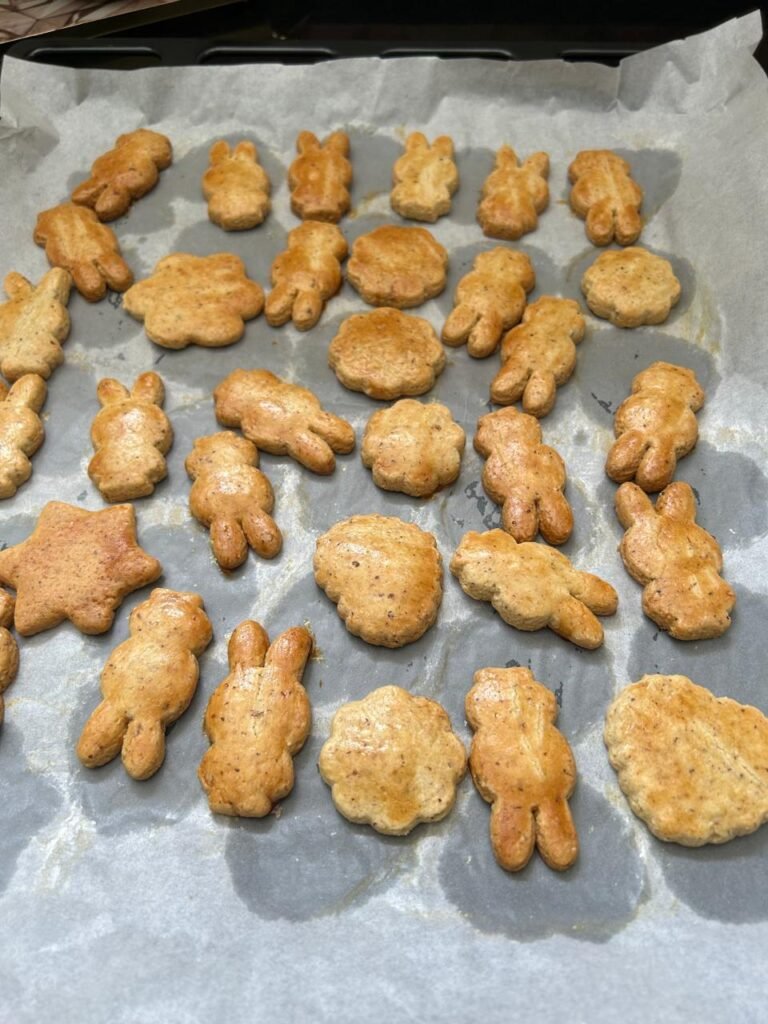
Step 6: Bake until golden. Bake in a preheated oven at 320°F (160°C) for approximately 25 minutes until golden and baked through. The edges should be barely deeper in color than the centers-sablé cookies bake pale. They’ll feel slightly soft when warm but will firm up as they cool. Transfer to a wire rack and let cool completely before serving or storing. (See photo)
My Top Tips for Golden Almond Sablé Cookies
- Room temperature is everything. Soft butter creams smoothly; cold butter gets lumpy and overworked dough becomes tough. If you forget to soften your butter, cut it into cubes and let them sit in a warm bowl for 10 minutes.
- Don’t skip the cornstarch. This ingredient is what makes sablé cookies tender and melt-in-your-mouth. It inhibits gluten development. Use all ¾ cup-no substitutions.
- Roll between parchment, not on a floured surface. Flour toughens the dough. Parchment prevents sticking without adding extra flour, so your cookies stay delicate.
- Brush the egg white thinly and evenly. Too much egg white makes them sticky and prevents browning. A light, even coat is all you need for that golden finish.
- Bake at the exact temperature. 320°F (160°C) is lower than most cookie recipes, but it’s intentional-this slow bake keeps them tender. If your oven runs hot, rotate the pan halfway through.
Common Problems and Fixes
Why are my cookies spreading too much or turning out flat?
Either your butter was too soft or your dough was overworked. Make sure butter is soft but still holds its shape (if it’s pudding-like, it’s too warm). Also, don’t knead the dough excessively-stop as soon as it comes together. If spreading happens, refrigerate the cut dough for 15 minutes before baking.
Why are my cookies too hard or crumbly?
You likely used too much flour or didn’t include the full ¾ cup cornstarch. Measure flour by spooning and leveling, not scooping. Also, overbaking hardens them-pull them out at 25 minutes when the edges are just barely golden, not dark brown.
Why did my cookies not get that golden glaze?
Either the egg white was applied too thickly (bakes opaque instead of golden), or you used too much and it pooled on the pan. Brush just a thin, even coat using a soft pastry brush. A little goes a long way.
Why do my cookies taste bitter?
Your almond flour may be old or stored in a warm place. Ground almonds can turn rancid quickly. Store opened almond flour in the fridge or freezer, and check that it smells sweet, not sour. If in doubt, replace it with fresh almond flour.
Storage and Make-Ahead for Golden Almond Sablé Cookies
Dough storage (refrigerator): The rolled dough on parchment can be refrigerated for up to 3 days, well-wrapped, before cutting and baking. The cut dough can also chill for 15 minutes before baking if you need to prevent spreading.
Baked cookies (airtight container, room temperature): Golden almond sablé cookies stay crisp for up to 1 week in an airtight container at room temperature. Store them in a single layer separated by parchment if possible, to prevent breakage.
Freezing (baked cookies, up to 3 months): Let cookies cool completely, then layer them in a freezer-safe container with parchment between layers. Thaw at room temperature for 30 minutes before serving-they’ll taste as fresh as the day they were baked.
Make-ahead tip: Prepare the dough the day before, wrap it, and refrigerate overnight. Roll and cut the next day, then bake. This spreads the work and ensures the dough is cold when you cut it, which means cleaner edges and less spreading in the oven.
FAQ
Can I make these without ground almonds?
Almonds are what give these cookies their distinctive flavor and tender texture. If you have an almond allergy, you could try finely ground sunflower seeds or hazelnuts in equal measure, though the flavor will differ. The texture may also be slightly different since almond flour has unique fat content.
What if I don’t have a pastry brush for the egg white?
A clean finger works fine-just tap it gently into the beaten egg white and brush lightly across the top of each cookie. Or use a silicone brush (even better than traditional brushes for this). The key is using very little egg white, so the brush or finger doesn’t leave too much behind.
Can I use egg yolk instead of egg white for the glaze?
Egg yolk will create a richer, more golden-brown finish, but it may brown too quickly at 320°F. If you want to try it, use an equal amount of beaten egg yolk and watch carefully-you may need to lower the oven temperature by 10 degrees or reduce baking time by a few minutes.
How do I get perfect shape when cutting?
Keep your cookie cutters cold by dipping them in ice water between cuts, then wipe dry. This prevents dough from sticking to the cutter. Also, press straight down without wiggling side-to-side. A clean, confident downward press gives you sharp edges.
Buttery, tender, and golden-these sablé cookies taste like a French bakery brought home to your kitchen. Golden almond sablé cookies prove that elegant doesn’t require complicated. One bowl, simple ingredients, and a pastry brush are all you need.
Nutrition Disclaimer: This recipe does not include nutritional analysis. For precise nutrition data, use a nutrition calculator like MyFitnessPal or Cronometer with your specific ingredient brands.
Golden almond sablé cookies belong on your holiday cookie platter, in gift boxes for neighbors, or simply as an everyday treat that tastes like you spent hours perfecting them. They pair beautifully with tea or coffee, and they’re delicate enough to impress but simple enough to make on a Tuesday afternoon. Try pairing them with nut and seed shortbread cookies or easy chocolate chip cookie bars for a complete cookie collection. If you make this recipe, send me a photo-I’d love to see your creations.
Golden Almond Sablé Cookies (One-Bowl Recipe)
Ingredients
Method
- Cream butter and sugar: In a large bowl, combine the ⅞ cup soft butter, pinch of salt, 7g vanilla sugar, and 1¼ cups powdered sugar. Mix and work together thoroughly for 2-3 minutes until pale, light, and fluffy.
- Add eggs: Crack in the 2 large eggs and continue mixing well into the butter mixture until smooth and creamy with no yolk streaks visible.
- Incorporate almonds, starch, and flour: Add the 1 cup ground almonds, ¾ cup cornstarch, and 3¼ cups all-purpose flour in portions, kneading gently until a soft, cohesive cookie dough forms. Do not overmix.
- Roll and cut: Place the dough onto parchment paper, cover with another sheet, and roll out evenly to about ¼ inch thick. Use cookie cutters to cut out shapes-stars, flowers, or rounds.
- Arrange and brush: Transfer the cut cookies to a baking sheet lined with parchment paper, spacing them 1 inch apart. Lightly brush the tops with 1 beaten egg white using a soft pastry brush.
- Bake until golden: Bake in a preheated oven at 320°F (160°C) for approximately 25 minutes until golden and baked through. Edges should be barely deeper in color than centers. Transfer to a wire rack and let cool completely.
Notes
– Don’t skip the ¾ cup cornstarch-it makes sablé cookies tender and melt-in-your-mouth.
– Roll dough between parchment sheets, not on a floured surface, to keep cookies delicate.
– Brush egg white thinly and evenly-too much prevents browning and makes them sticky.
– Bake at exactly 320°F (160°C) to keep cookies tender. Rotate pan halfway through if oven runs hot.
– Dough can be refrigerated up to 3 days wrapped, or rolled and chilled 15 minutes before baking to prevent spreading.
– Store baked cookies in an airtight container at room temperature for up to 1 week, or freeze up to 3 months.
– Make-ahead: Prepare dough the day before and refrigerate. Roll and cut the next day, then bake for fresh cookies.