Fluffy Buttermilk Pancakes (Thick, One Bowl, No Whipping)
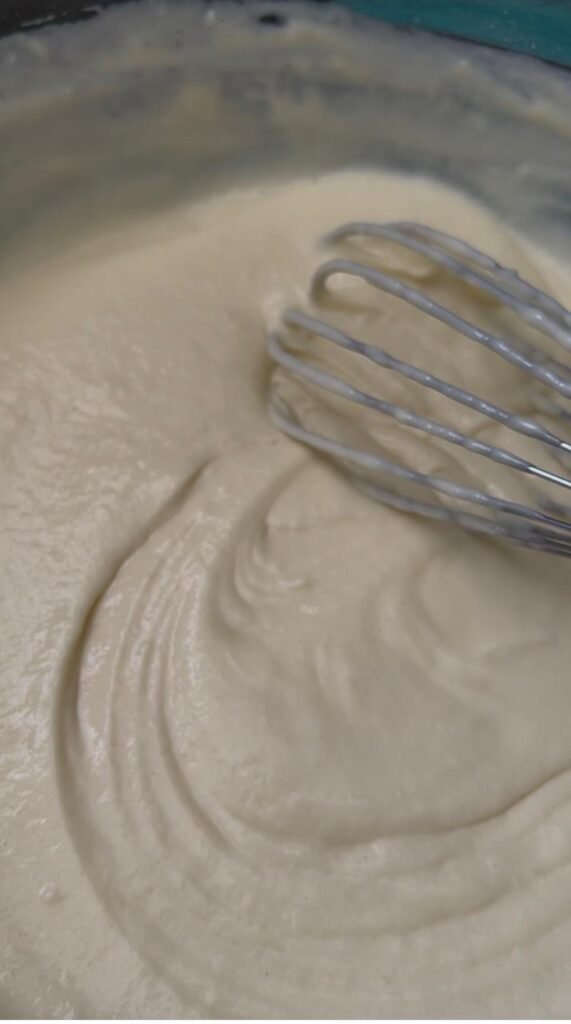
These fluffy buttermilk pancakes rise thick enough that you can see every layer in the stack, and the secret is not one acid but two. Buttermilk does most of the work, but a half cup of plain yogurt goes in alongside it, and the extra body is what holds the bubbles instead of letting them collapse. The batter comes off the whisk thick and slow, almost like soft-serve (see photo). With four kids in the house, a Saturday morning pancake stack does not survive long, so this recipe makes a real batch. Here is the technique, and the mistakes that flatten pancakes before they ever hit the pan.
Why You’ll Love These Fluffy Buttermilk Pancakes
- Genuinely thick, not just wide. The double-acid batter (buttermilk plus yogurt) gives the baking powder more to react against, and the yogurt gives the batter enough structure to hold the lift.
- One bowl, one whisk. No separating eggs, no whipping whites, no folding. Everything goes into the same bowl in order.
- It makes a real batch. Three cups of flour gives you around 20 pancakes – a full stack for a hungry table, not four sad ones.
- The batter is forgiving. It is thick, so it holds its shape in the pan instead of spreading into a crepe.
Ingredient Notes
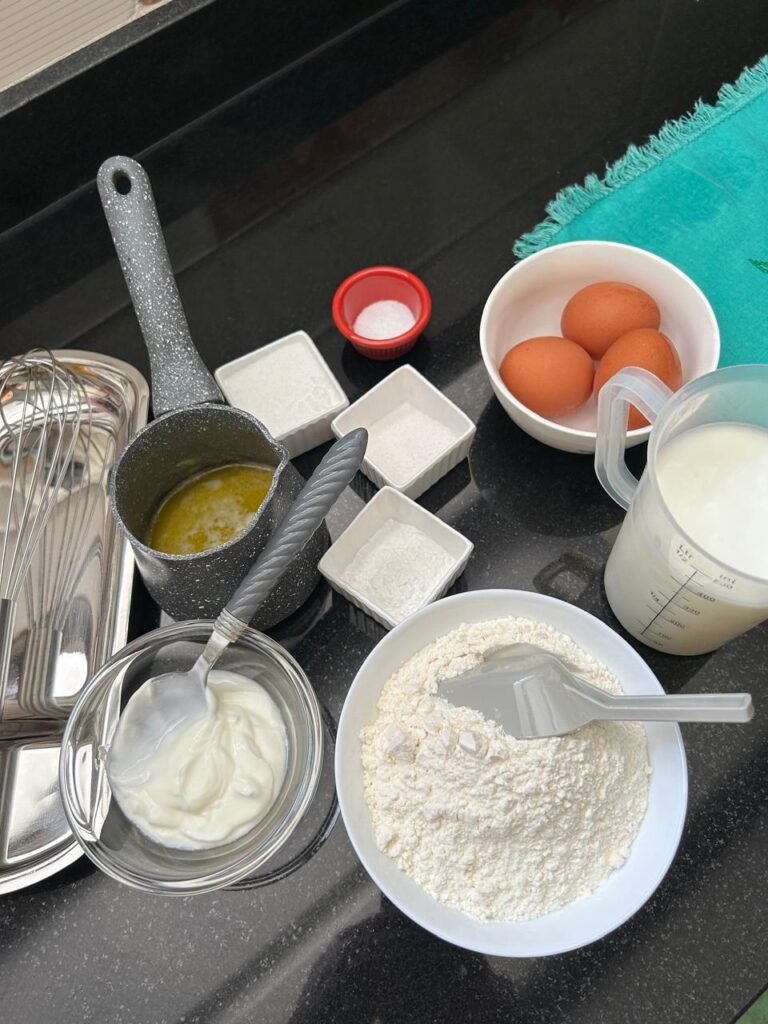
| Ingredient | What to know |
|---|---|
| Buttermilk (2 cups / 450 g) | Real buttermilk, not milk. If you cannot find it, make a substitute: 2 cups milk plus 2 tbsp lemon juice or white vinegar, left to sit 10 minutes until it thickens and curdles slightly. |
| Plain yogurt (1/2 cup / 100 g) | This is the part most pancake recipes skip. Use plain, full-fat, unsweetened. Greek yogurt is thicker and works, but thin it with a splash of milk. Do not use flavored or low-fat yogurt. |
| Baking powder (1 tbsp / 14 g) | Check the date on the tin. Baking powder loses strength after about six months open, and old baking powder is the single most common reason pancakes come out flat. |
| Melted butter (3.5 tbsp / 50 g) | Cool it slightly before it goes into the bowl. Poured in hot, it will start to cook the eggs and you will see little white flecks. |
| Flour (3 cups) | Spoon it into the cup and level it. Scooping straight from the bag packs it and can add 50 g or more, which turns fluffy into heavy. |
How to Make Fluffy Buttermilk Pancakes – Step by Step
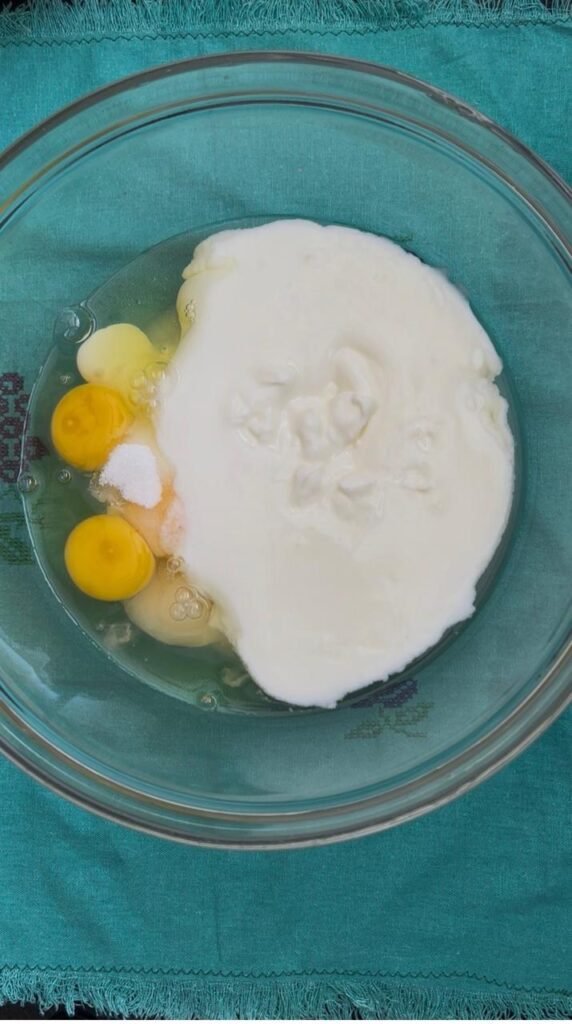
Wet ingredients first, all together. Whisk the eggs, salt, vanilla, sugar, yogurt and buttermilk in one large bowl until smooth (see photo). Do this properly – the yogurt is thick and will leave lumps if you rush it. You want a completely uniform liquid before anything else goes in.
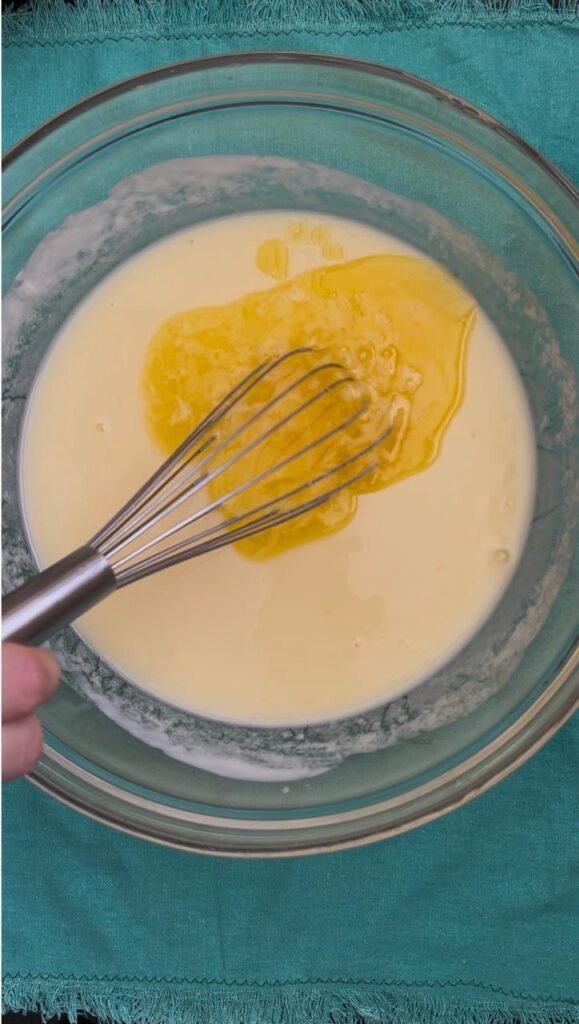
Butter next, on its own. Pour in the melted butter and whisk it through (see photo). Adding it separately, after the dairy, keeps it from seizing into beads against cold buttermilk.
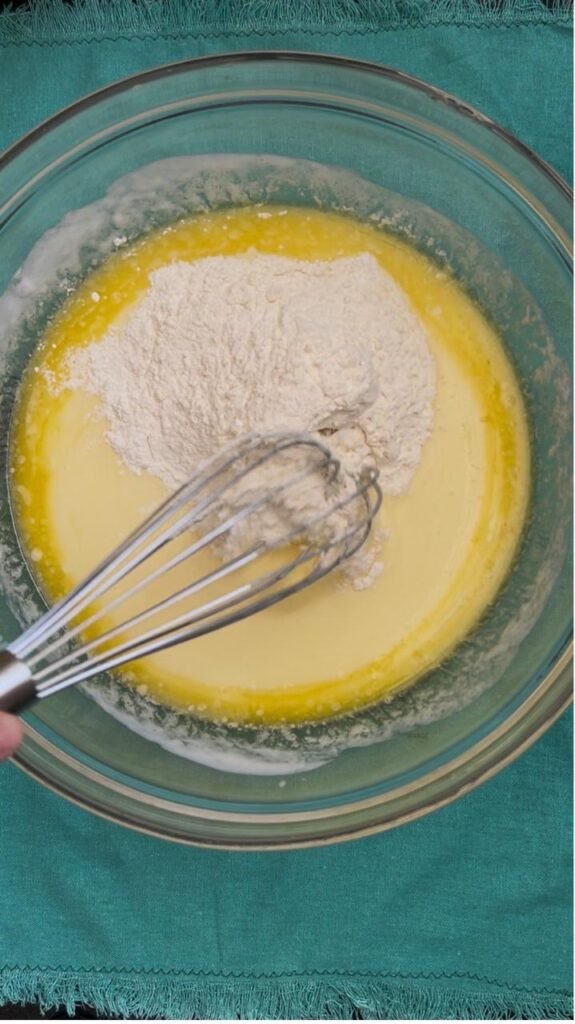
Flour and baking powder last – and stop early. Add them gradually and whisk until the batter is smooth (see photo). This is where pancakes are won or lost. The moment the flour is hydrated, gluten starts building, and gluten makes pancakes chewy and tough. Whisk until you no longer see dry flour and then put the whisk down. A few small lumps are fine and will cook out.
Let the batter rest. Give it 10 to 15 minutes on the counter before you cook. The flour finishes absorbing the liquid, the batter thickens noticeably, and the baking powder gets a head start on producing bubbles. You will see the surface turn slightly puffy and airy (see photo). This single step is the difference between good and very good.
Medium-low heat, and be patient. This is the step everyone gets wrong. A hot pan browns the outside in ninety seconds while the inside is still raw batter, and the pancake collapses as it cools. Medium-low lets the pancake set all the way through as it rises. The first pancake is always a test – use it to calibrate your heat.
Flip on bubbles, not on the clock. Cook the first side until bubbles form across the whole surface and the edges look dry and set, usually about 2 to 3 minutes. Flip once, then give the second side another 1 to 2 minutes until golden. Do not press down on the pancake with your spatula – you are squeezing out exactly the air you spent all this effort creating.
My Top Tips for the Fluffy Buttermilk Pancakes
- Do not overmix. Ever. If I could only give one tip, this is it. A smooth batter is the goal; a beaten batter is the enemy. Stop whisking the second the flour disappears.
- Rest the batter. Ten minutes costs you nothing and gives you visibly taller pancakes.
- Wipe the pan between batches. Butter left in the pan burns and turns the next pancake blotchy brown instead of even gold. A quick wipe with a paper towel between pancakes keeps them looking like the photos.
- Use a ladle or measuring cup, not a spoon. Pouring the same amount each time is how you get a stack that looks like a stack instead of a pile of mismatched circles.
- Keep them warm without steaming them. Stack them on a plate in a low oven (around 200°F / 90°C), uncovered. Cover them and the trapped steam turns the crisp edges soggy.
The bubbles are your timer. When they rise, pop, and stay open across the whole surface – not just the edges – the pancake is ready to flip. Flipping before that means the underside is still liquid and the pancake will deflate.
Common Problems and Fixes
Why are my buttermilk pancakes flat and not fluffy?
Three usual causes. Old baking powder (test it: a spoonful in hot water should fizz hard), overmixed batter, or you pressed on them with the spatula. The fourth, less obvious one: you cooked them on high heat, so they browned before they had time to rise.
Why are my buttermilk pancakes raw in the middle?
The pan is too hot. The outside cooks and browns long before the heat reaches the center of a thick pancake. Drop the heat to medium-low and give them longer. If they are already browning fast, the heat is too high.
Why are my pancakes tough and chewy?
Overmixing. Every extra stroke of the whisk after the flour is wet develops more gluten, and gluten is what makes bread chewy. Mix until just combined and accept a few lumps.
Why did my first pancake come out badly?
It almost always does, and it is not your fault. The pan has not reached a stable temperature yet. Every cook accepts that the first pancake is the sacrificial one – use it to judge whether your heat is right and adjust.
Storage and Make-Ahead
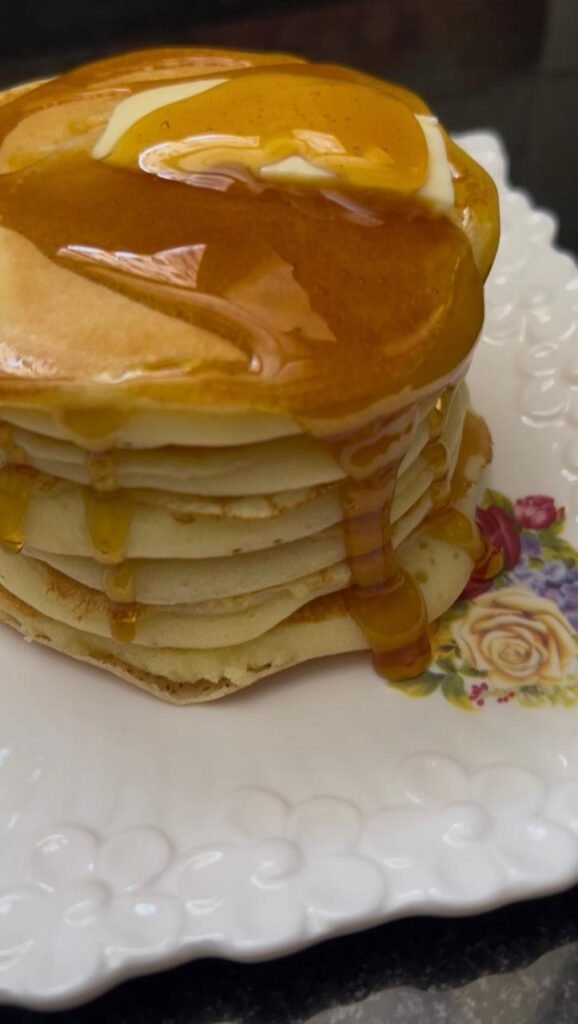
Cooked buttermilk pancakes keep in an airtight container in the fridge for up to 3 days. To freeze, lay them flat on a tray in a single layer until solid, then transfer to a freezer bag with parchment between the layers – they keep for about 2 months and you can pull out exactly as many as you need. Reheat straight from frozen in a toaster or a hot oven, never the microwave, which turns them rubbery. You can also mix the dry ingredients ahead and store them in a jar; on the morning, you only have to whisk in the wet ingredients.
FAQ
Can I make these fluffy buttermilk pancakes without buttermilk?
Yes. Add 2 tablespoons of lemon juice or white vinegar to 2 cups of regular milk and let it sit for 10 minutes until it thickens slightly. It is not identical to real buttermilk, but the acid is what matters for the reaction with the baking powder.
Can I make the batter the night before?
I would not. Baking powder starts reacting the moment it hits liquid, and by morning most of the lift is gone. Instead, mix the dry ingredients in a jar the night before and whisk in the wet ingredients in the morning – it takes two minutes.
Why does this recipe use yogurt as well as buttermilk?
Buttermilk provides the acid that reacts with the baking powder, and yogurt adds body. A thicker batter traps the bubbles instead of letting them escape, which is why these pancakes hold their height instead of spreading thin in the pan.
Do I have to rest the batter?
You do not have to, but it makes a visible difference. Ten to fifteen minutes lets the flour fully hydrate and the batter thicken, and gives the baking powder a head start. Skipping it will still give you good pancakes, just slightly less tall ones.
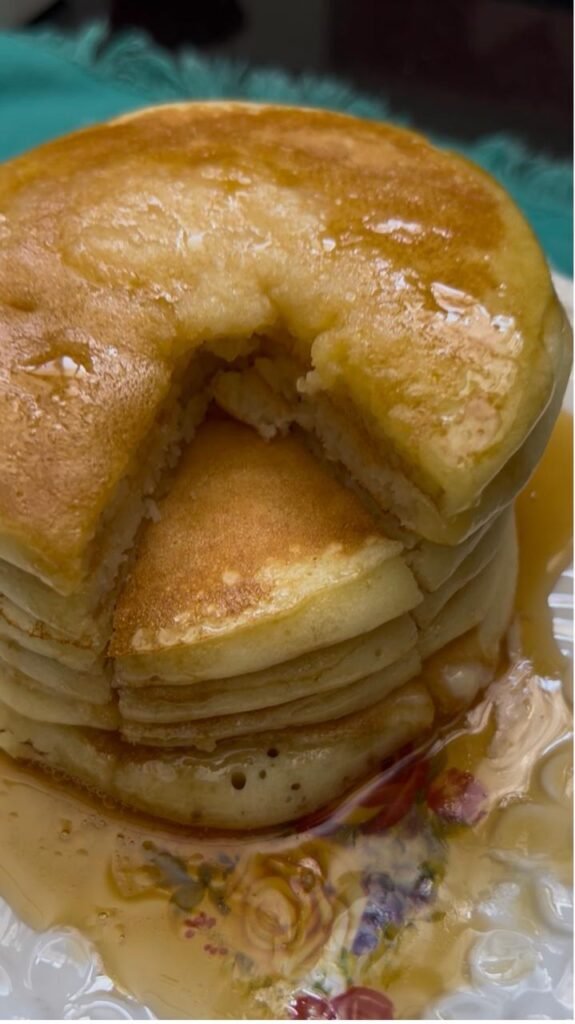
These fluffy buttermilk pancakes never last long here – I know before the first one comes off the pan exactly how fast the stack is going to go. I make these pancakes almost every day – they are that much of a staple in my kitchen – and I often keep a batch in the fridge so there is always something ready when the kids are hungry. If you want another simple bake that comes together in one bowl, try my fluffiest almond cake next. And to see how thick the batter should look before it goes in the pan, the short video is right here.
Fluffy Buttermilk Pancakes
Ingredients
Method
- In a large bowl, whisk together the eggs, salt, vanilla, sugar, yogurt and buttermilk until completely smooth.
- Pour in the melted butter and whisk until fully combined.
- Gradually add the flour and baking powder. Whisk just until the batter is smooth – do not overmix.
- Let the batter rest for 10 to 15 minutes at room temperature.
- Heat a non-stick pan over medium-low heat. Pour a small ladle of batter for each pancake.
- Cook until bubbles form across the surface and the edges look set, about 2 to 3 minutes, then flip once. Do not press down.
- Cook the second side for another 1 to 2 minutes until golden brown.
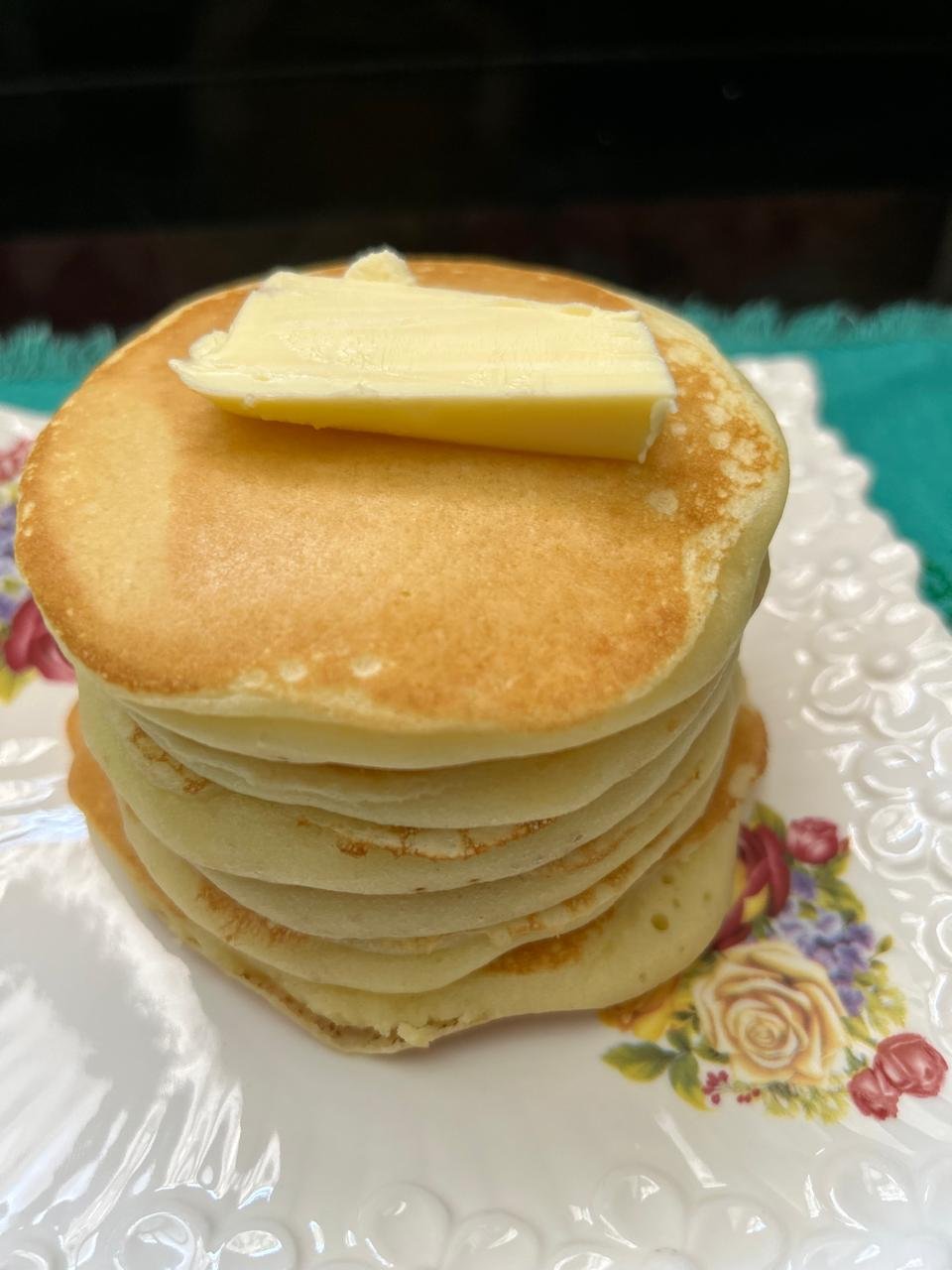
- Stack and serve with a pat of butter and a drizzle of syrup.
Notes
Resting the batter for 10 to 15 minutes gives visibly taller pancakes.
Medium-low heat is essential. High heat browns the outside before the inside has time to rise.
Wipe the pan clean between batches so the butter does not burn and blotch the next pancake.