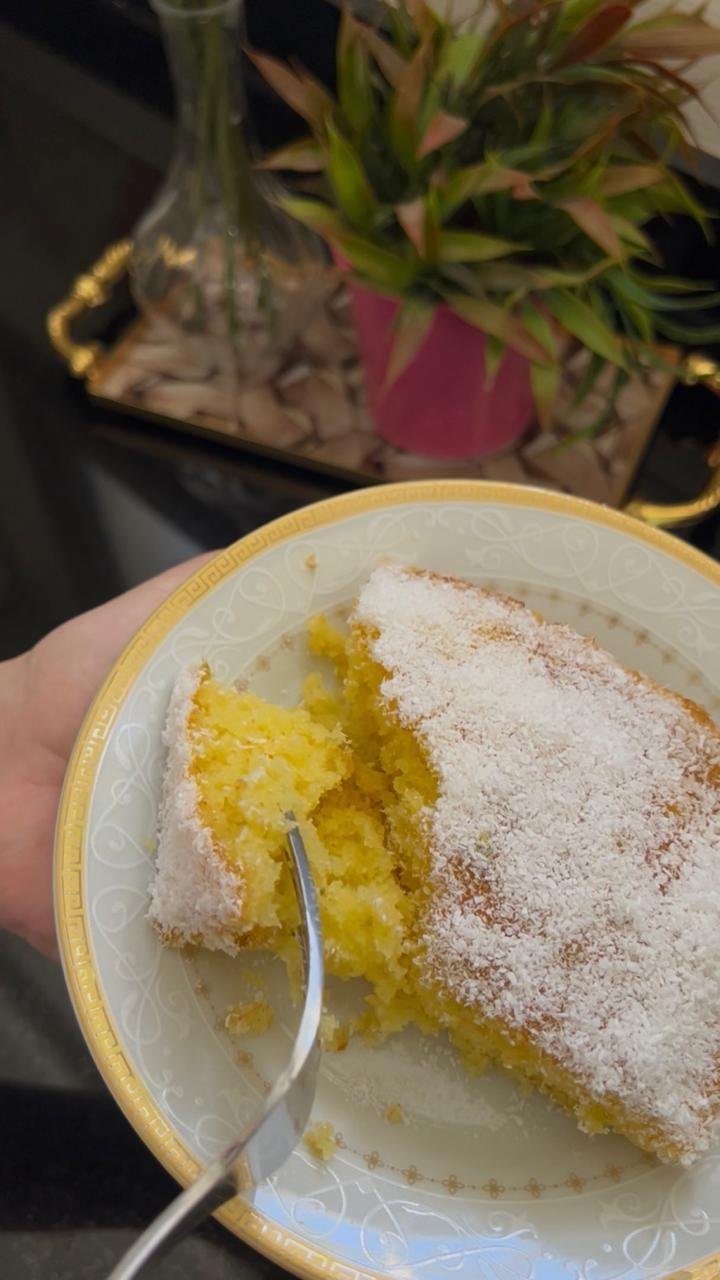
Orange Almond Cake (Moist, One Bowl, No Frosting)
This orange almond cake is what happens when you stop treating citrus like a background note. Four eggs beaten until pale and airy, a full cup of fresh orange juice, the zest of both an orange and a lemon, and a whole cup of melted butter – the batter pours out of the bowl the color of late-afternoon sun. Sliced almonds go on top before it bakes, so they toast into a crackly golden lid while the crumb underneath stays tender and damp. With four kids in the house, a cake this size disappears faster than it cools. Here is exactly how I make it, and the small technical choices that keep it from turning dense.
Why You’ll Love This Orange Almond Cake
- Real citrus, not extract. A full cup of orange juice plus two kinds of zest means the flavor is in the crumb itself, not painted on top with a glaze.
- One bowl, one mixer, no creaming. You beat eggs and sugar, pour everything else in, sift the flour over it. There is no softened-butter stage to plan around.
- The almond top does double duty. It toasts into texture and it means the cake needs no frosting – just powdered sugar and it looks finished.
- It feeds a crowd. Three cups of flour makes a generous single layer, which is the only reason it survives a weekend at my table.
Ingredient Notes
Only a few things here are worth a real conversation. The rest is exactly what it looks like.
| Ingredient | What to know |
|---|---|
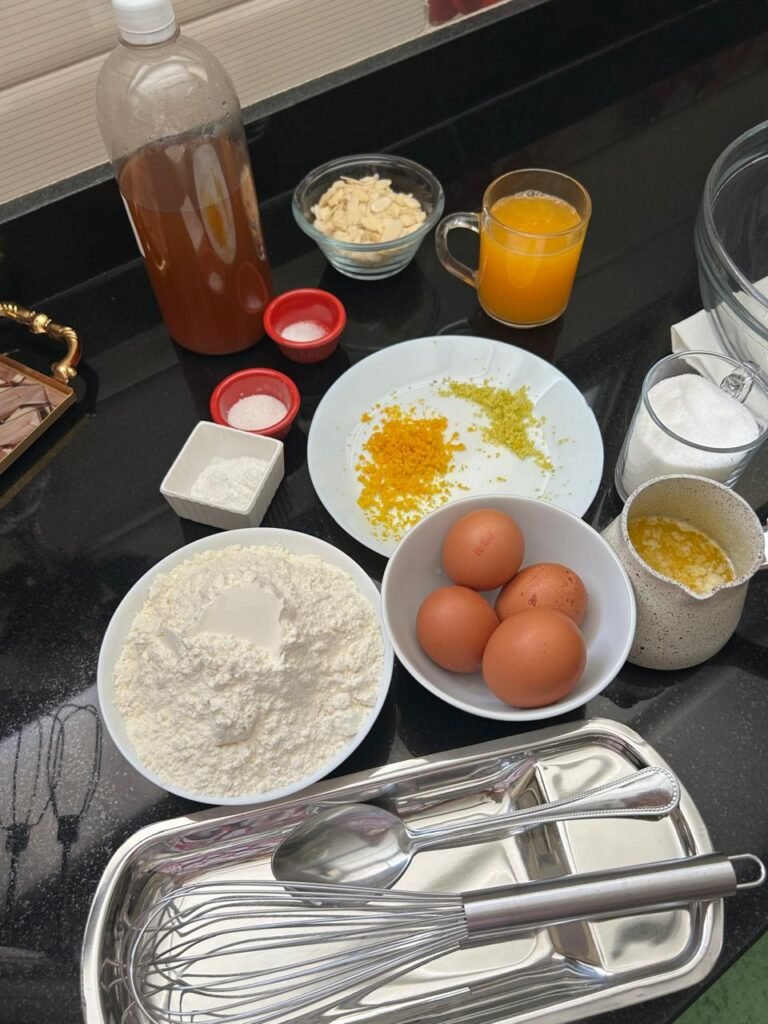
| Orange juice (1 cup / 240 ml) | Fresh-squeezed is best – it takes about 3 medium oranges. Bottled works but tastes flatter and slightly bitter. Zest your orange before you juice it. |
| Orange + lemon zest | Do not skip the lemon. The orange alone reads sweet and one-dimensional; the lemon zest is what makes the whole thing taste bright instead of sugary. Zest only the colored layer – the white pith underneath is genuinely bitter and it does not bake out. |
| Melted butter (1 cup / 227 g) | Let it cool for a few minutes before it goes in. Hot butter poured into beaten eggs will start to cook them, and you will feel it in the crumb. |
| Apple cider vinegar (1 tbsp) | This is not a typo and you will not taste it. The acid reacts with the baking powder for extra lift, and it slightly tenderizes the crumb. White vinegar or lemon juice both substitute fine. |
| Sliced almonds | Buy sliced (thin flakes), not slivered (thick matchsticks). Slices toast evenly and lie flat; slivers sink and stay pale. |
How to Make Orange Almond Cake – Step by Step
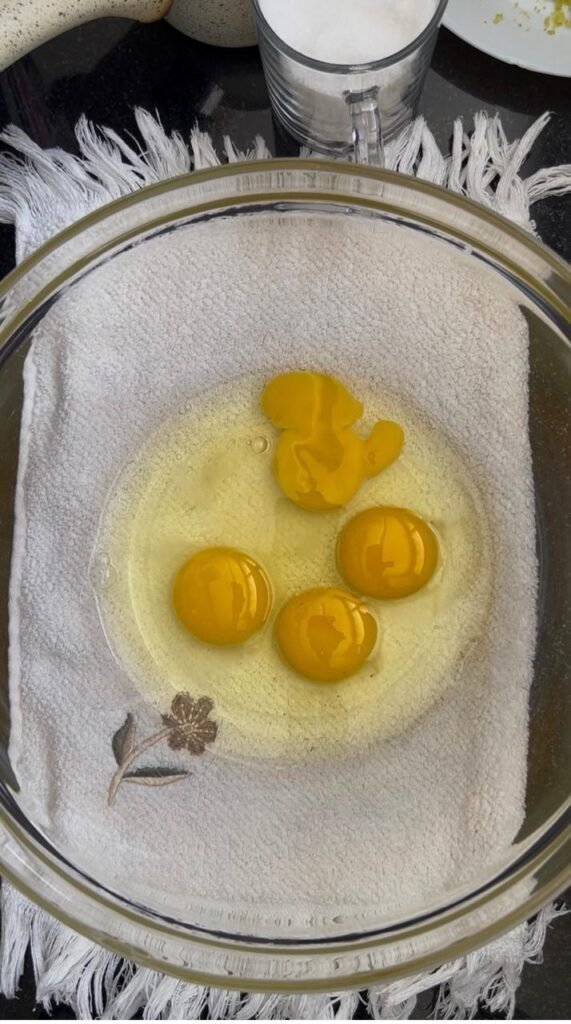
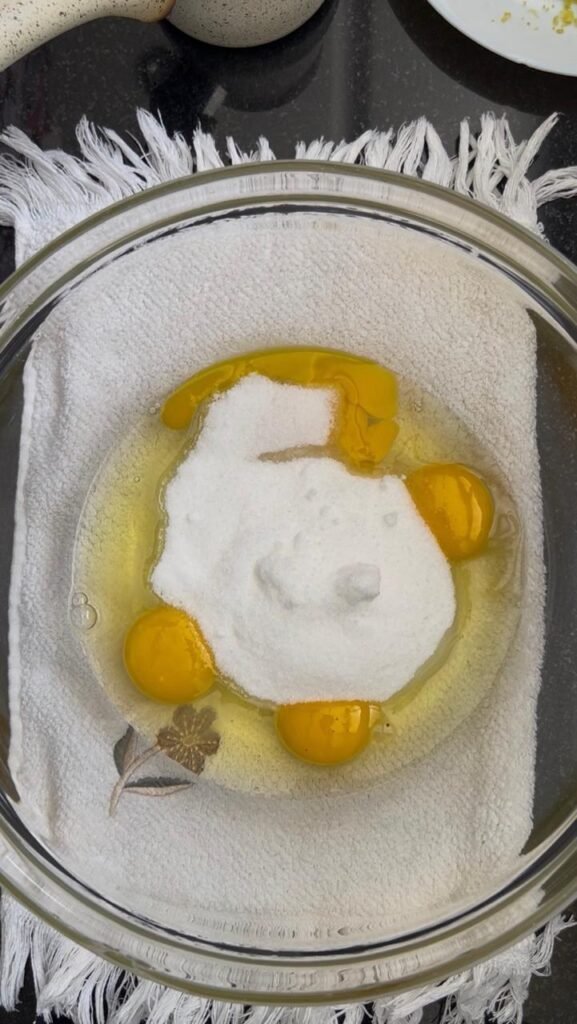
Beat the eggs and sugar properly. Crack 4 eggs into a large bowl with a pinch of salt and the sugar, and beat with an electric mixer until the mixture is pale, thickened, and visibly foamy (see photo). This is the only aeration this cake gets before the baking powder takes over, so give it a real 3 to 4 minutes. When you lift the beaters, the batter should fall back in a ribbon rather than a stream.
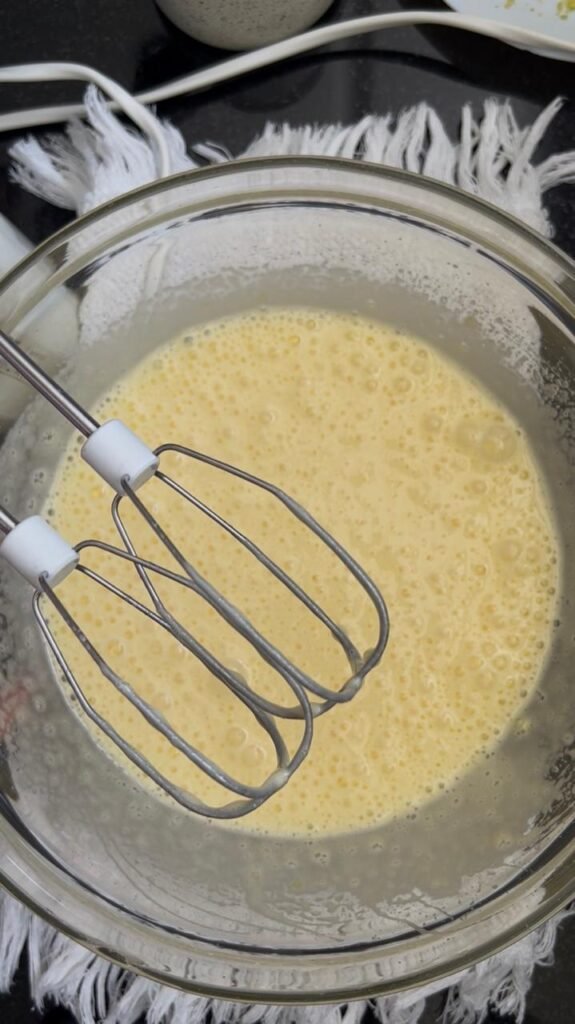
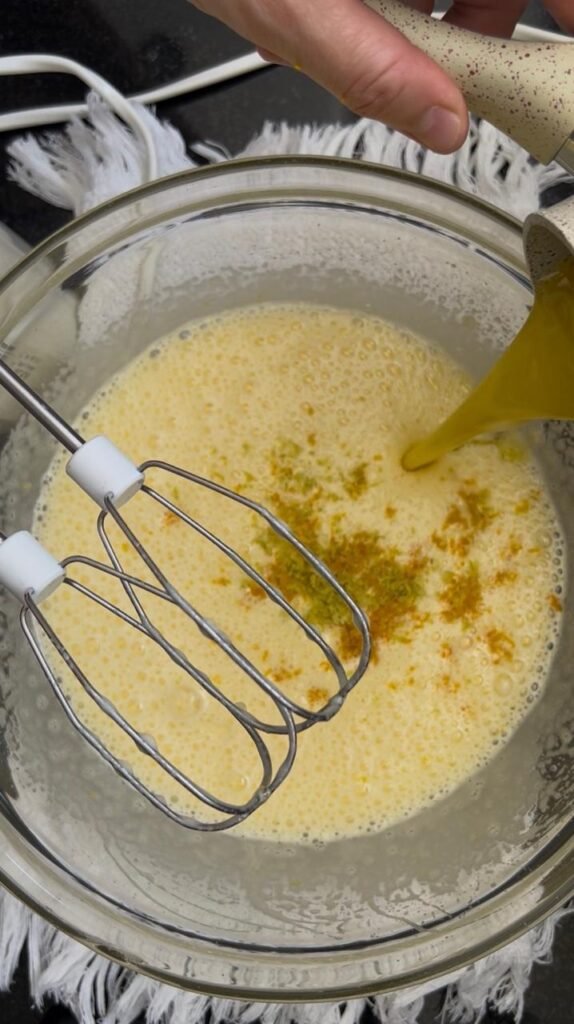
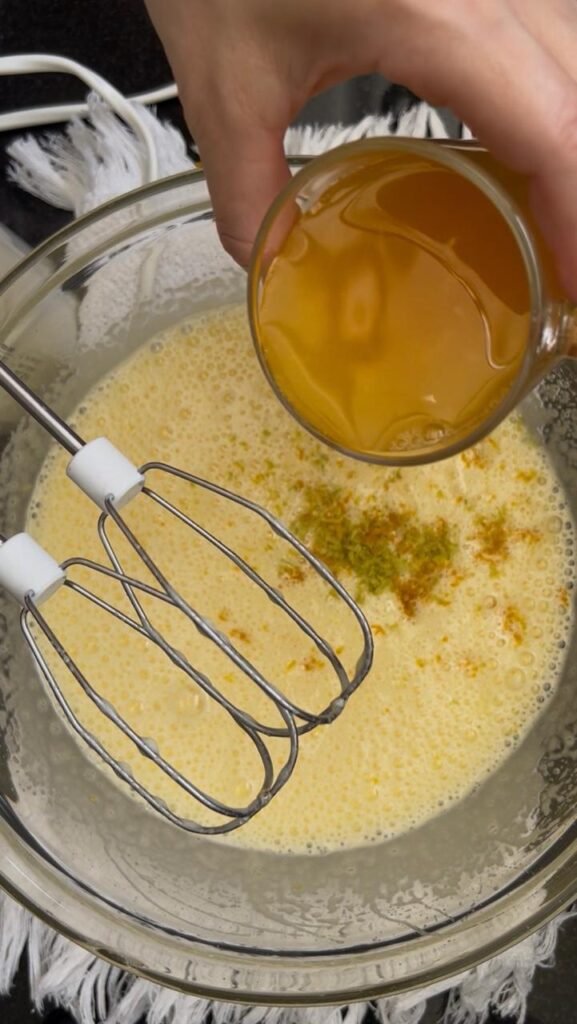
Add the flavors while the mixer is running. In goes the vanilla, both zests, the cooled melted butter, and the cup of orange juice (see photo). It will look alarmingly thin and loose at this stage. That is correct – three cups of flour are still coming, and this liquid volume is exactly what makes the finished crumb moist rather than dry.
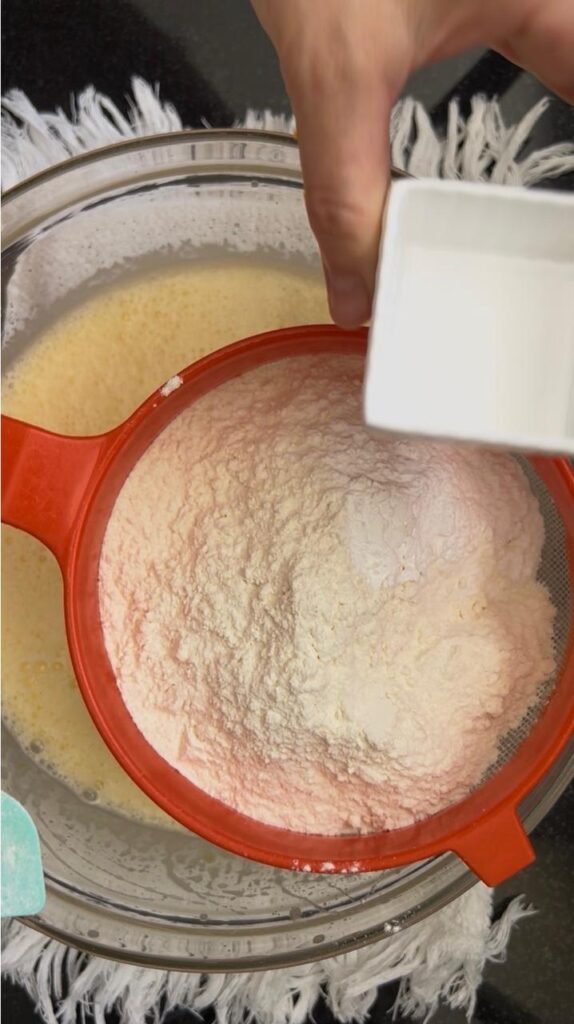
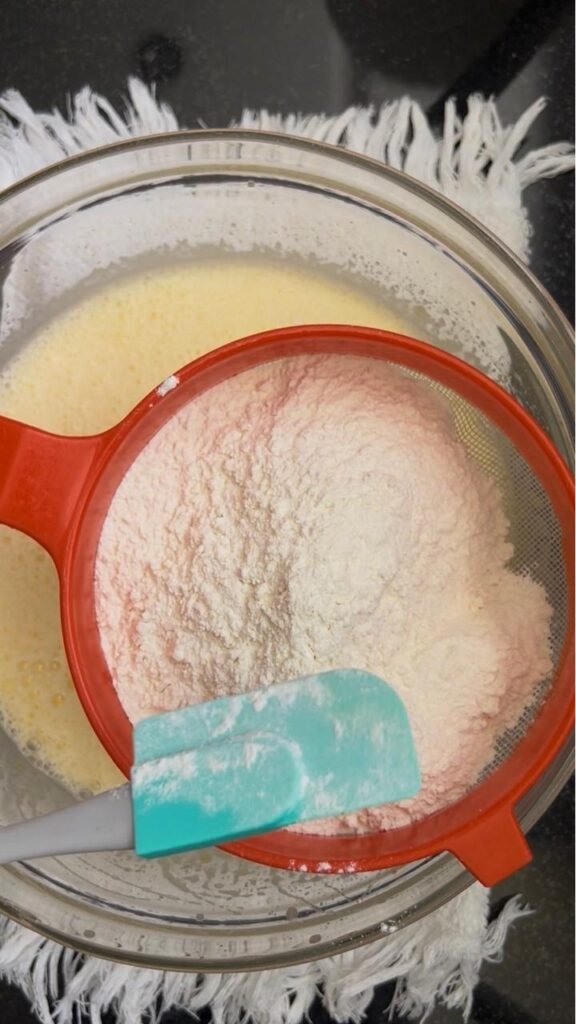
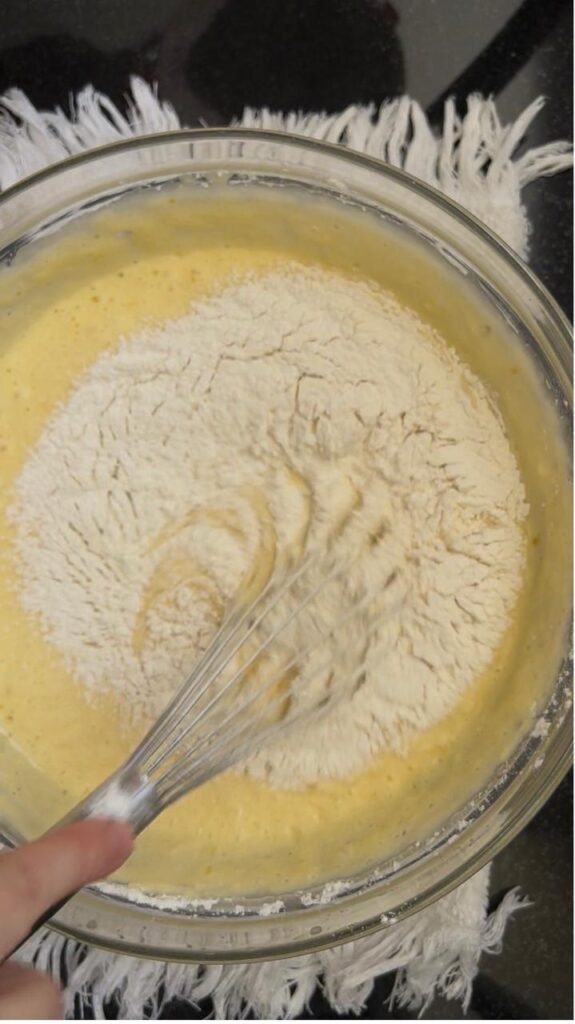
Sift the flour and baking powder in, in stages. Sifting is not optional here. You are adding 14 g of baking powder to 3 cups of flour, and if it is not evenly distributed you get pale tunnels in some places and a metallic aftertaste in others. Add the dry mix in two or three additions, folding with a whisk (see photo) rather than the electric mixer. Once flour meets liquid, gluten starts developing – the mixer will overwork it and give you a tough, rubbery cake.
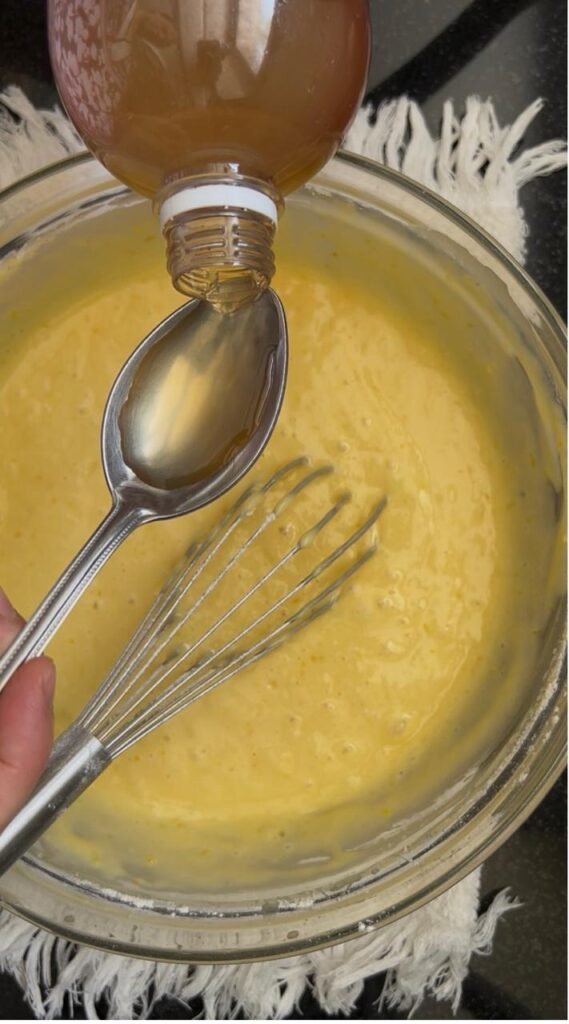
Vinegar last. Whisk in the tablespoon of apple cider vinegar until just combined, and get the batter into the pan quickly. The acid and baking powder start reacting on contact, and that reaction is doing its best work in the oven, not on your counter.
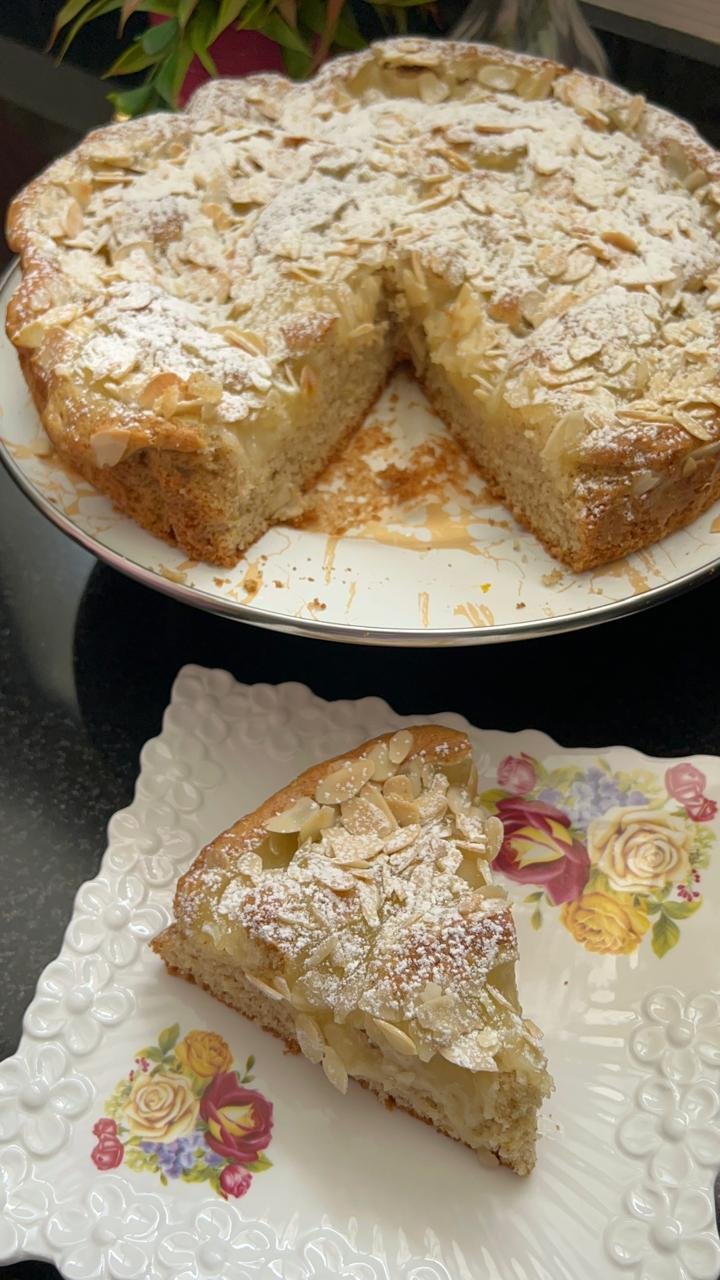
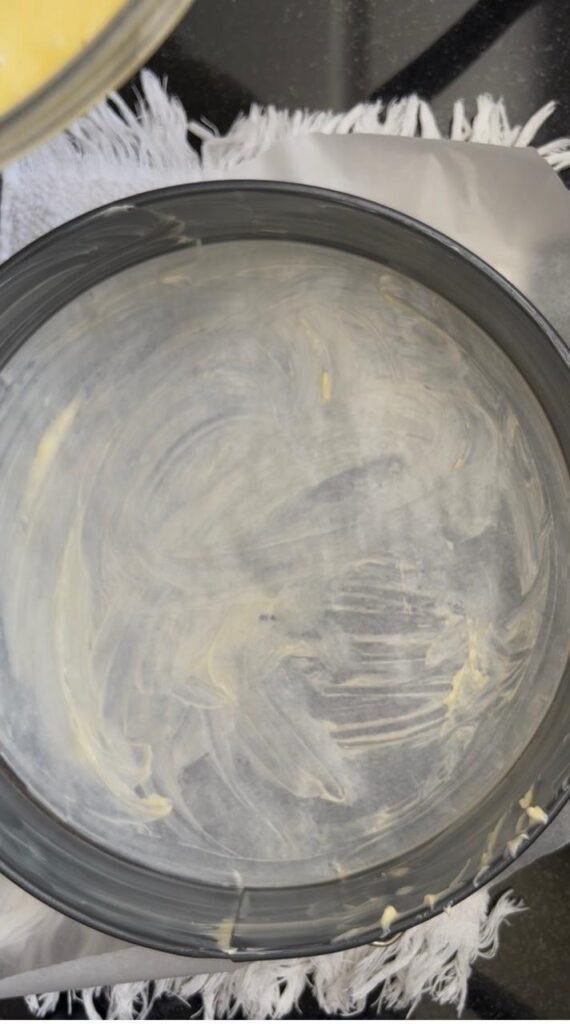
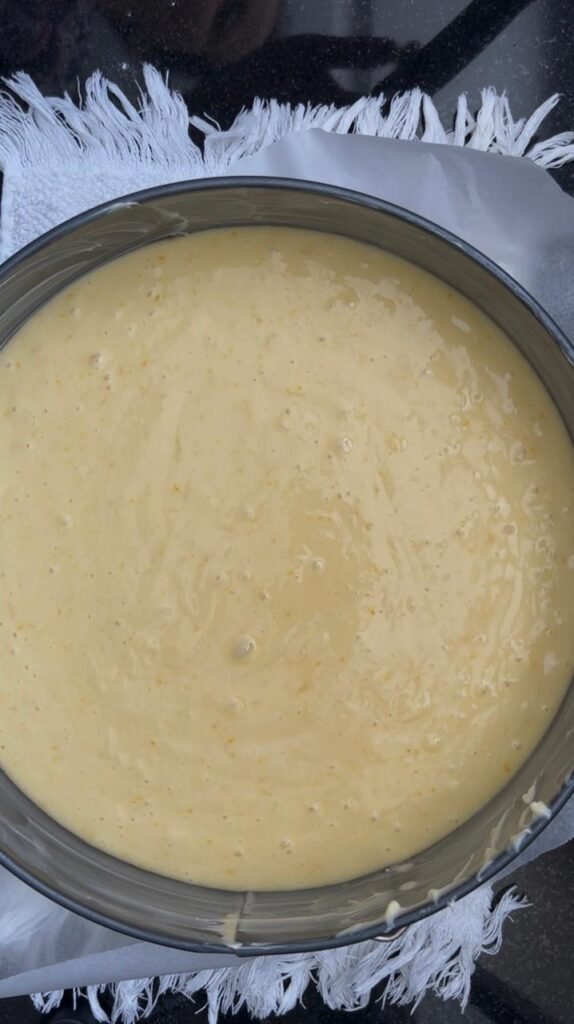
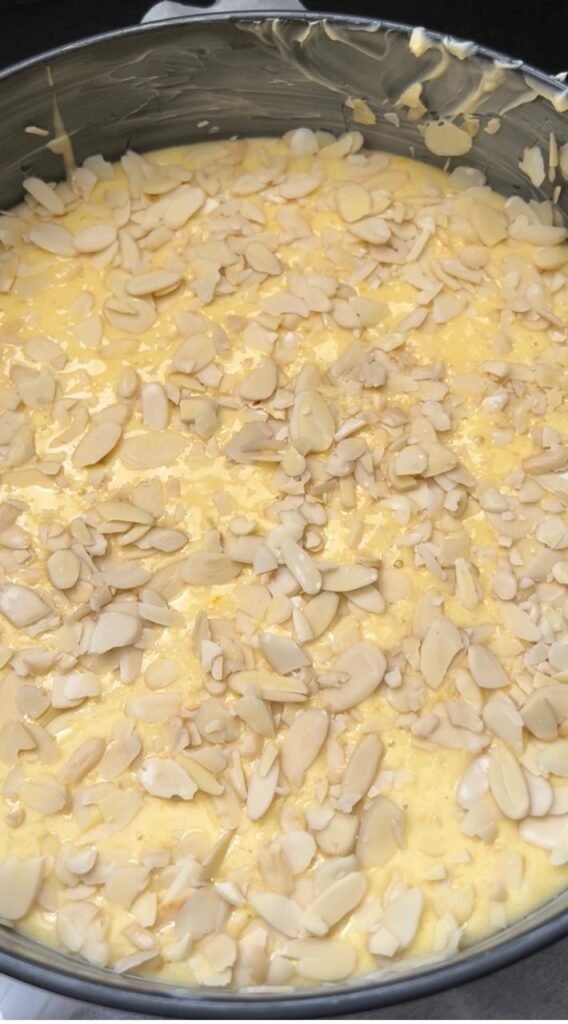
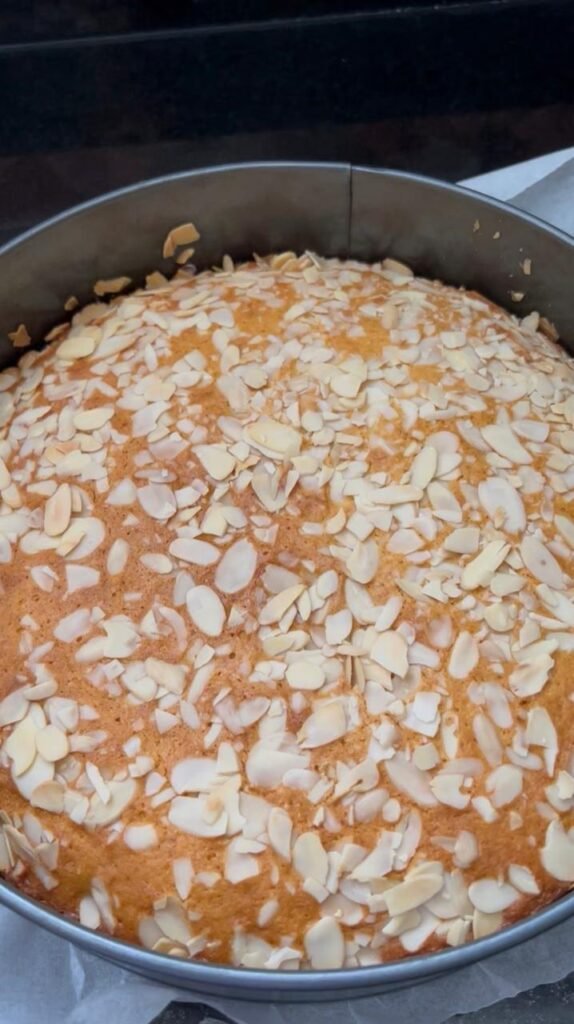
Pan, almonds, bake. Grease the pan well and line the base with parchment (see photo). Pour the batter in, then scatter the sliced almonds over the surface in an even layer – go heavier than feels reasonable, because they spread and settle as the cake rises. Bake at 350°F (180°C) for 45 to 50 minutes, until the top is deep golden and a skewer inserted in the center comes out with a few dry crumbs. I use a 28 cm (11 inch) round pan (see photo).
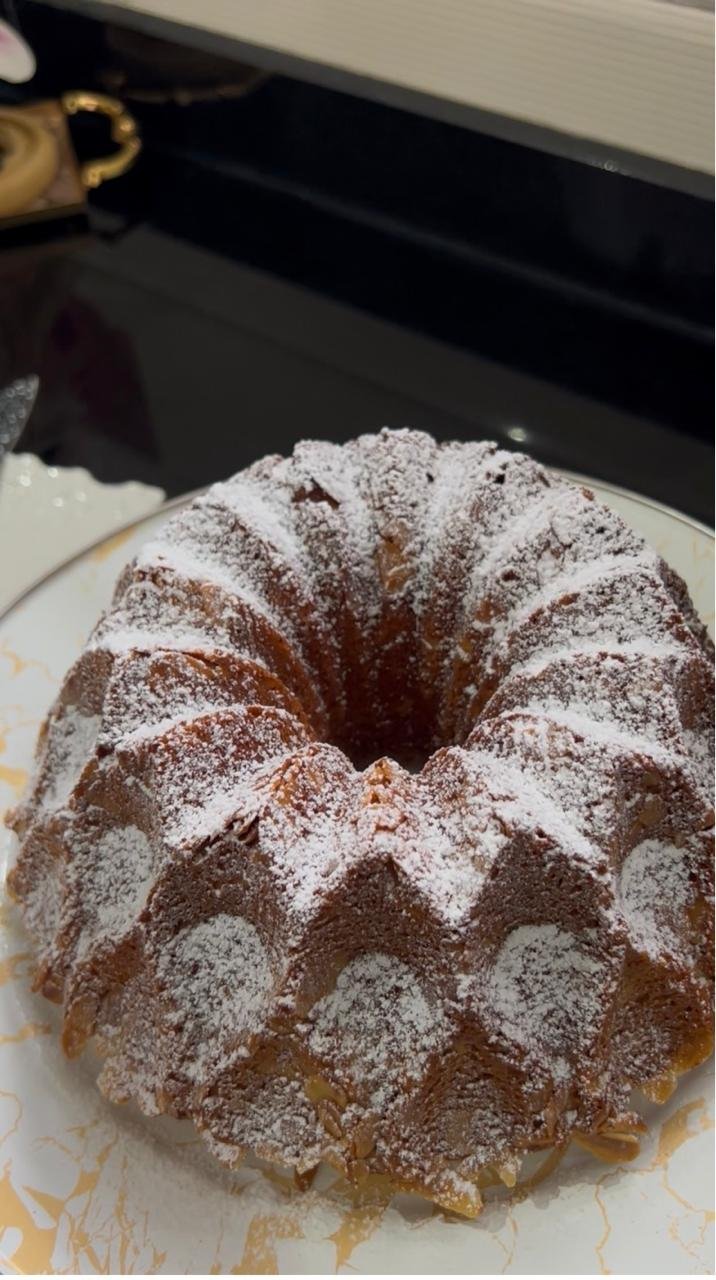
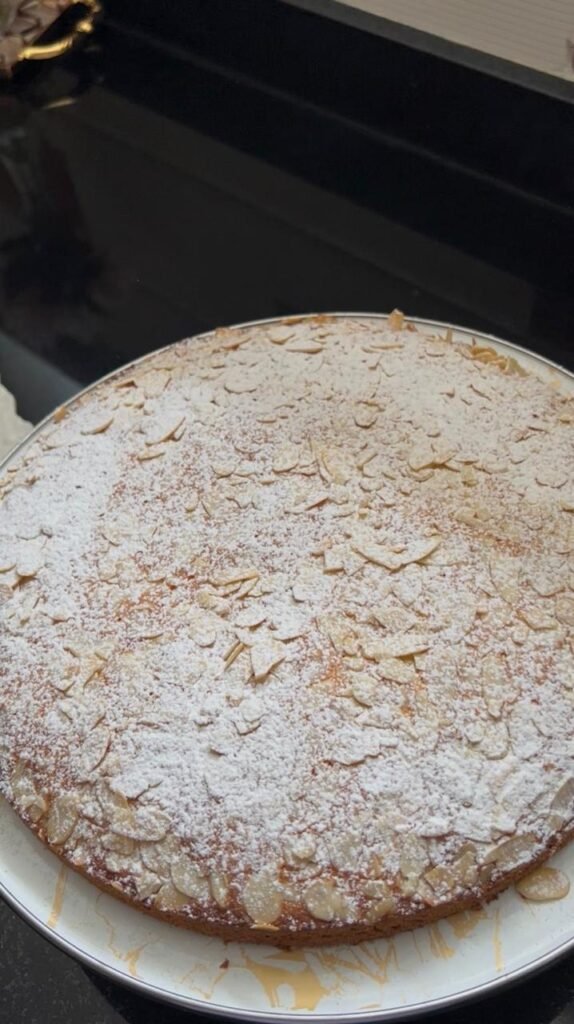
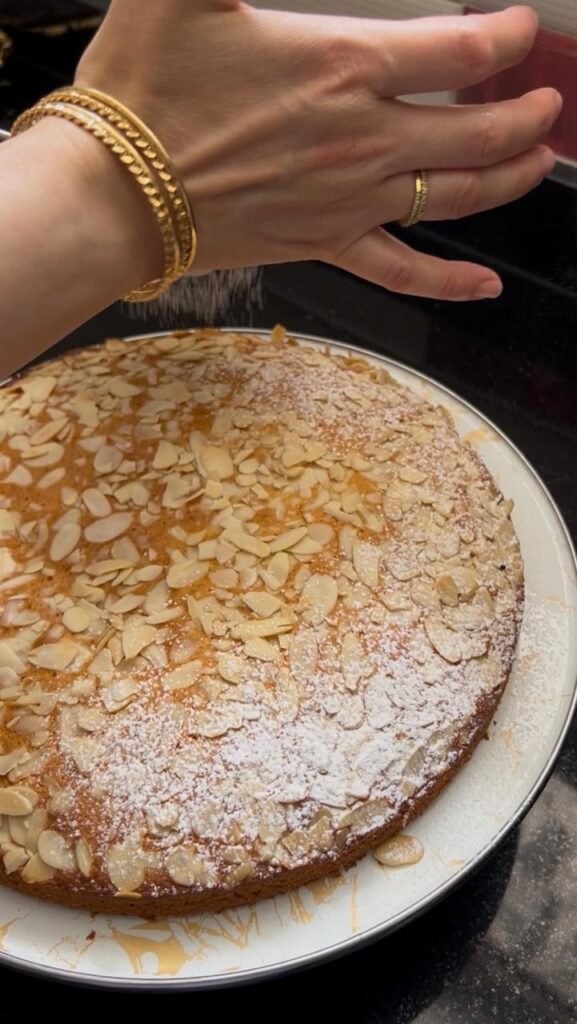
Cool completely, then dust. Let the cake cool in the pan for 10-15 minutes, then release it and cool it fully on a rack. Dusting powdered sugar over a warm cake is a waste of sugar – it dissolves into a damp film within minutes. Wait until the cake is at room temperature and the sugar sits on the almonds like frost (see photo).
My Top Tips for the Best Orange Almond Cake
- Zest before you juice. Once an orange is cut and squeezed, zesting it is a miserable job. Zest both fruits first, set the zest aside, then juice.
- Cool the butter, but do not let it set. Melted and warm-to-the-touch is the target. If it re-solidifies while you are zesting, it will seize into little beads when it hits the cold-ish egg mixture.
- Do not open the oven before 30 minutes. This is a tall, liquid-heavy batter leavened almost entirely by chemical lift. An early draft of cold air will drop the center and it will not come back up.
- Weigh your flour if you can. Three cups scooped straight from the bag can be 60 g heavier than three cups spooned and leveled – the difference between a moist cake and a dry one. Aim for about 375 g.
- Make it the day before if you can. The orange flavor deepens overnight and the crumb settles. It also means I am not fighting anyone away from a cake that has not finished cooling.
If the sliced almonds are browning too fast while the center is still wet, lay a sheet of foil loosely over the top for the last 10-15 minutes. Do not press it down – just rest it there. The almonds stop coloring and the crumb keeps baking.
Common Problems and Fixes
Why did my orange almond cake sink in the middle?
Almost always one of three things: the oven door was opened too early, the batter sat on the counter after the vinegar went in, or the cake came out before the center was set. Test with a skewer in the true center, not halfway between center and edge – that spot sets several minutes earlier.
Why is my cake dense instead of light?
You either under-beat the eggs and sugar at the start, or you over-mixed after the flour went in. Both are structural. Beat hard at the beginning, fold gently at the end – that order is the entire technique.
Why does my cake taste slightly bitter?
You caught pith when zesting. The white layer under the orange skin is intensely bitter and it does not bake out. Use a microplane and stop the moment you see white.
Why did my sliced almonds slide off when I cut it?
The cake was still warm when you cut it, so the crumb had not firmed up and the almonds had nothing to hold on to. Cool it completely – the powdered sugar dusting also helps glue them down slightly.
Storage and Make-Ahead
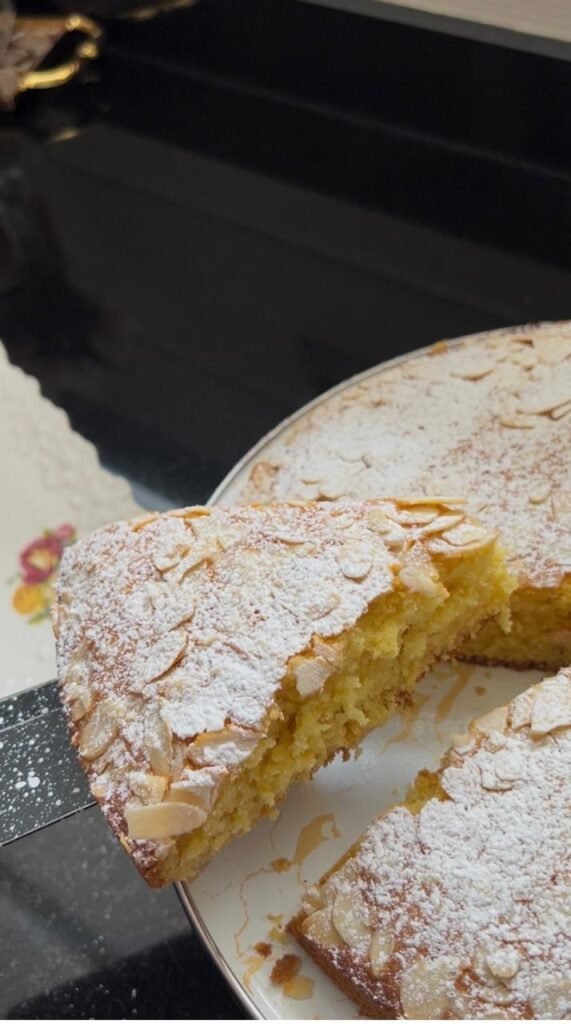
Store the cooled orange almond cake at room temperature in an airtight container for up to 4 days. The orange juice keeps the crumb moist longer than most butter cakes, and honestly it tastes better on day two once the citrus has settled into the crumb. Do not refrigerate it – the cold firms the butter and dries out the texture. To freeze, wrap the cooled cake (whole or in slices) tightly in plastic and then foil, and freeze for up to 3 months; thaw at room temperature and re-dust with fresh powdered sugar, since the original dusting will have dissolved. If you want it fully prepped ahead, bake it the day before and dust it just before serving.
FAQ
Can I use bottled orange juice in this orange almond cake?
Yes, and it will work. But fresh juice has a brighter, rounder flavor, and bottled juice often carries a faint cooked or bitter edge from pasteurization. If bottled is what you have, add an extra half teaspoon of zest to compensate.
What size pan should I use for this orange almond cake?
I use an 11 inch (28 cm) round pan, and that is what these times are based on. In a smaller pan the batter climbs too high and the center struggles to cook through before the almonds burn. If you only have a 9 inch pan, expect to add 10 to 15 minutes and check the center carefully.
Can I make this without the almonds?
You can, and the cake will still be good – it becomes a straightforward orange juice cake. But the toasted almond layer is what gives the top its texture and keeps it from needing a glaze, so I would look for a substitute like sliced hazelnuts before I skipped it entirely.
Do I have to use apple cider vinegar?
No. Any acid will do the same job with the baking powder – white vinegar or an equal amount of fresh lemon juice both work. What you should not do is leave it out, because you will lose a noticeable amount of lift.
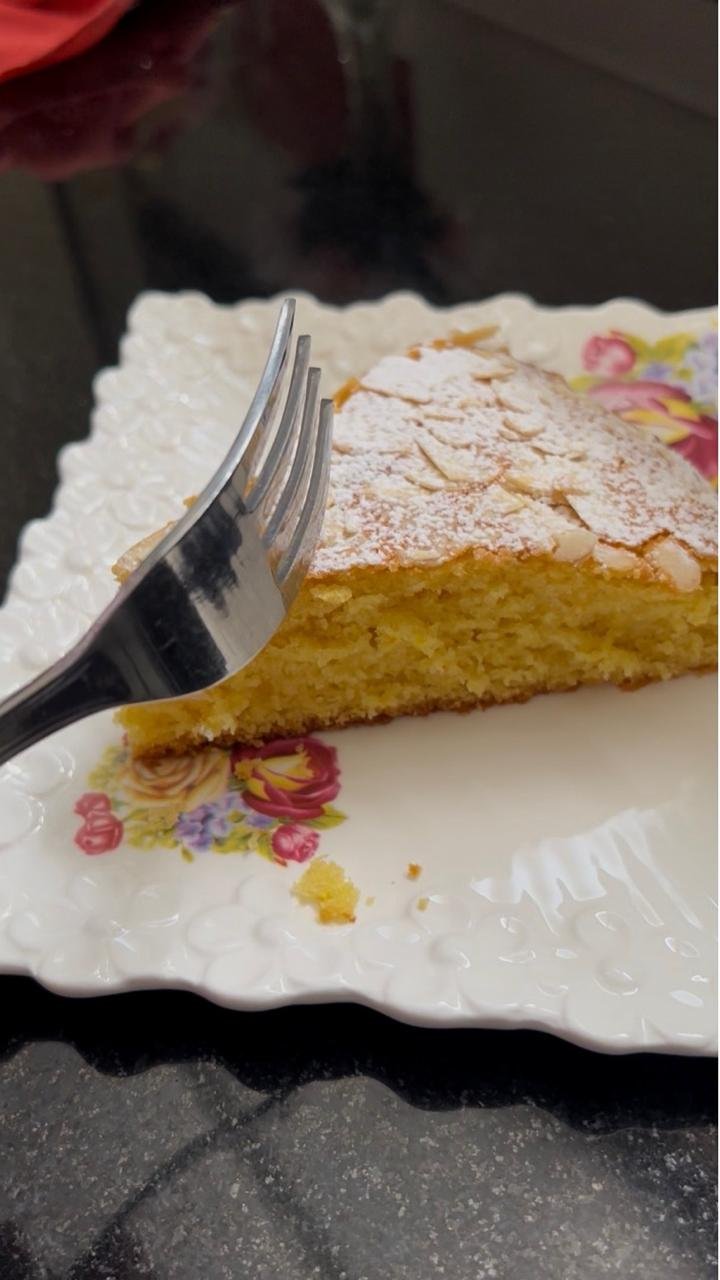
This orange almond cake has become one of the ones I bake without thinking – the kind where I already know how many slices will be gone before it fully cools. If the almond top is the part you love, you will want my fluffiest almond cake next, which takes the same idea and runs it all the way through the crumb. And if you want to see the batter come together in real time – especially how thin it looks before the flour goes in – the short video is right here.
Orange Almond Cake
Ingredients
Method
- Preheat the oven to 350F (180C). Grease a 28 cm (11 inch) round cake pan and line the base with parchment paper.
- In a large bowl, beat the eggs, salt and sugar with an electric mixer for 3 to 4 minutes, until pale, thickened and foamy.
- Add the vanilla, orange zest, lemon zest, melted butter and orange juice. Beat until smooth. The batter will look thin at this stage – that is correct.
- Sift the flour and baking powder over the batter in two or three additions, folding each one in gently with a whisk. Do not use the electric mixer here.
- Whisk in the apple cider vinegar until just combined, then pour the batter into the prepared pan straight away.
- Scatter the sliced almonds evenly over the surface.
- Bake for 45 to 50 minutes, until deep golden and a skewer inserted in the center comes out with a few dry crumbs.
- Cool in the pan for 10 to 15 minutes, then release and cool completely on a rack.
- Dust with powdered sugar once the cake is fully at room temperature, and serve.
Notes
Let the melted butter cool slightly before adding it. Hot butter poured into beaten eggs will start to cook them.
If the almonds are browning too fast before the center is set, lay a sheet of foil loosely on top for the last 10 to 15 minutes.
Weigh your flour if you can – 3 cups should be around 375 g. Scooping straight from the bag can add 60 g and dry out the cake.