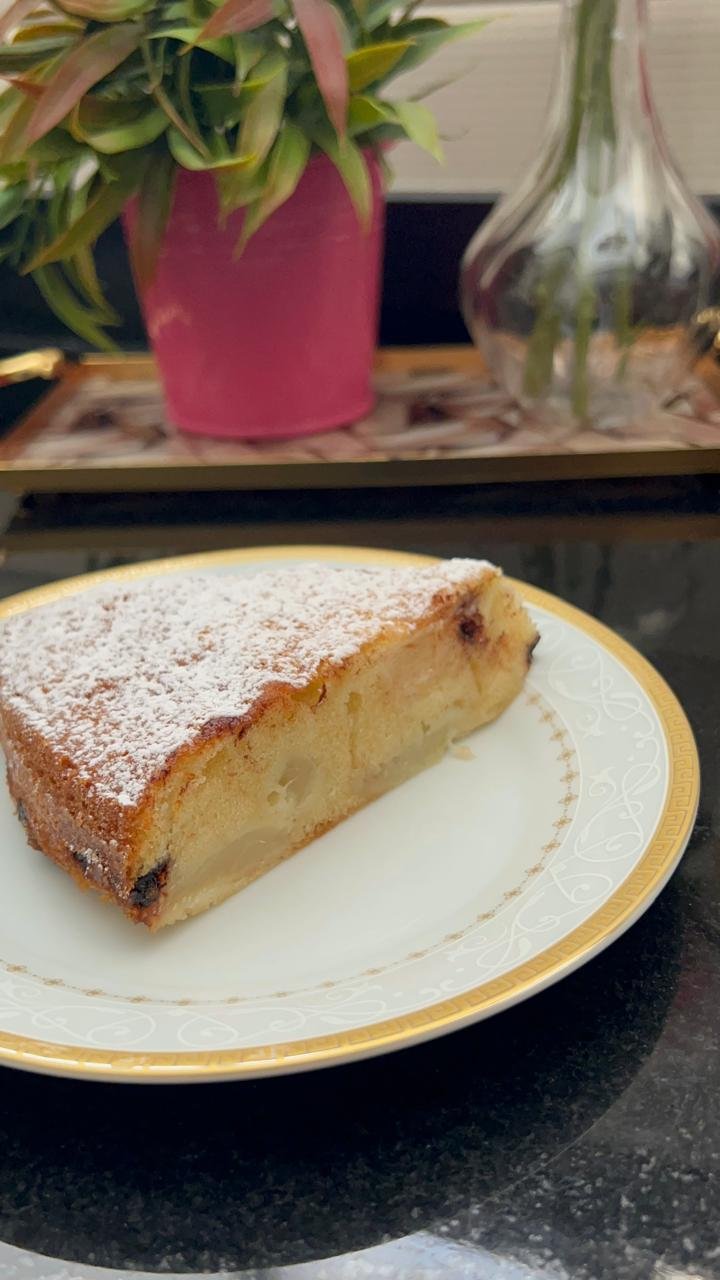
The Fluffiest Almond Cake Recipe (Soft & Easy)
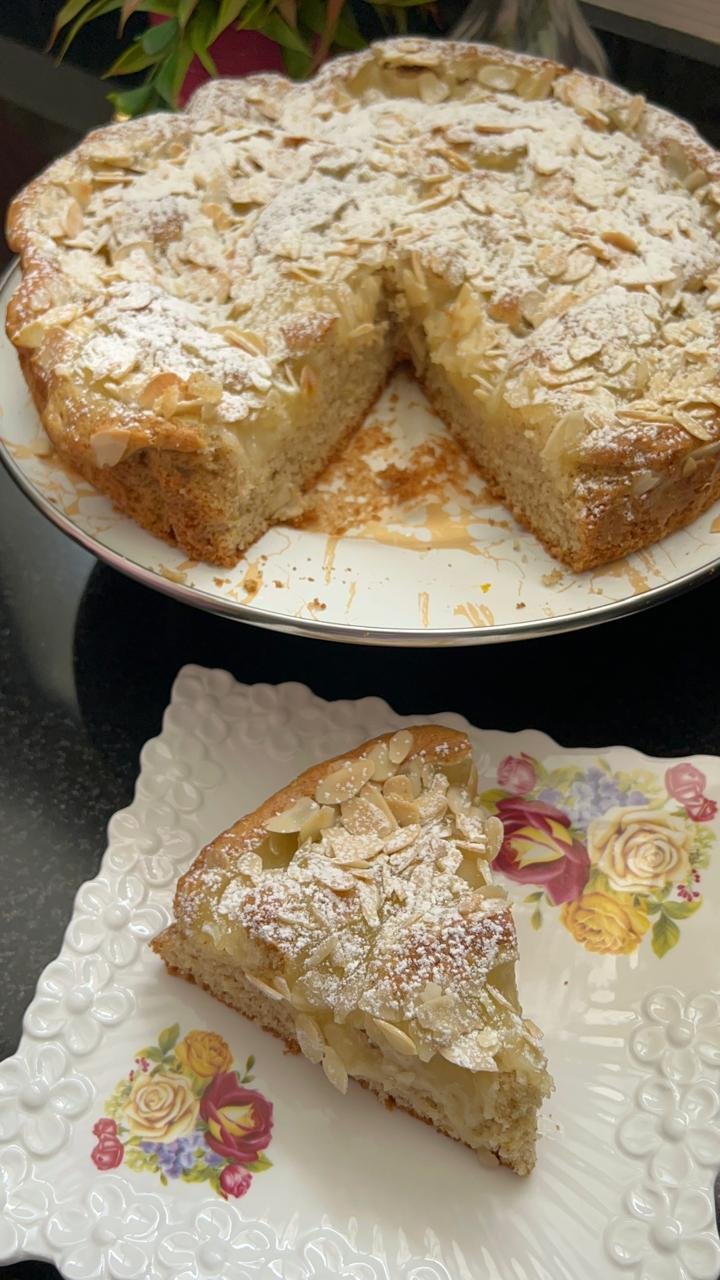
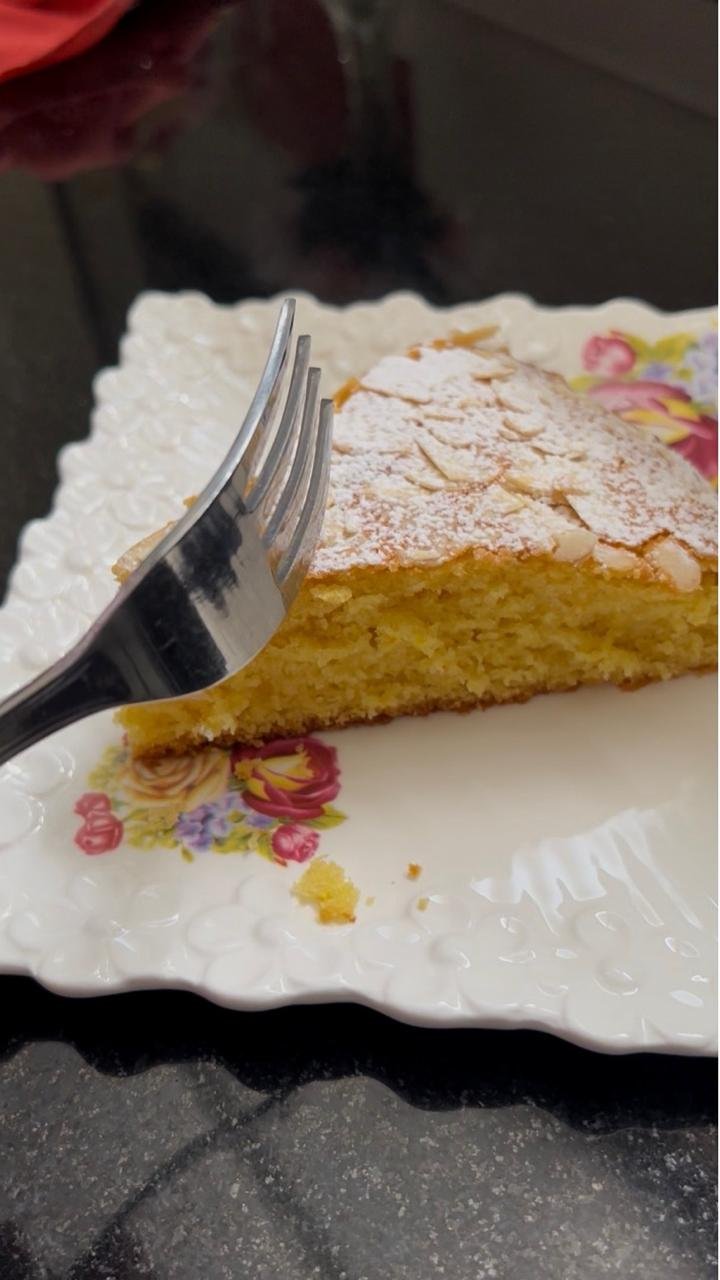
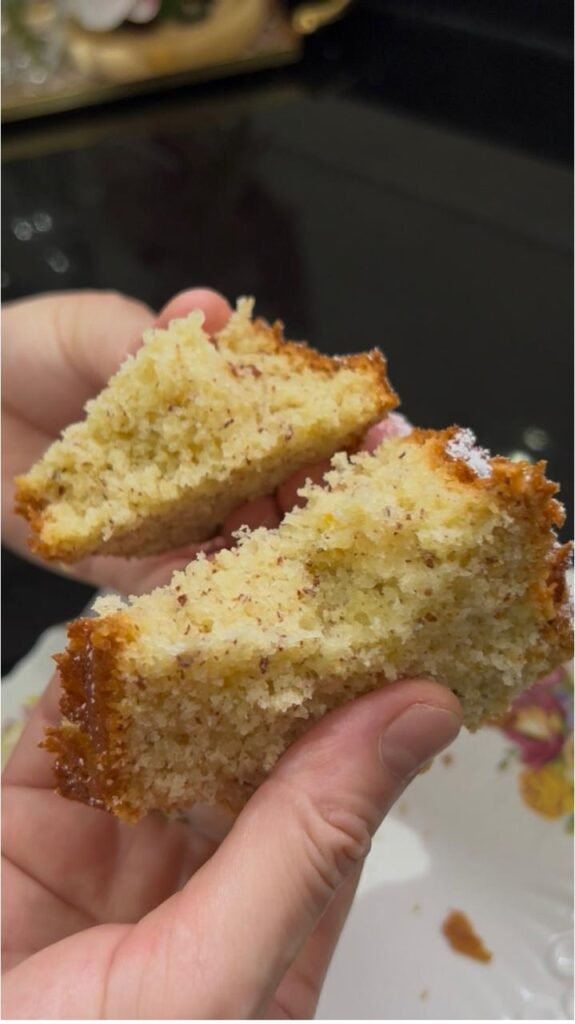
This almond cake recipe bakes up unbelievably light, with a tender, fluffy crumb and a golden ring of toasted almond flakes on top. The secret is beating the eggs and sugar until they’re pale and airy, then folding in ground almonds for that warm, nutty richness. It smells incredible while it bakes, and in my house it never makes it past the afternoon with four hungry kids around. Here’s exactly how I make it, plus every tip so yours turns out just as tall and soft.
Why You’ll Love This Almond Cake
- Genuinely fluffy, not dense. Whipped eggs and sugar create the airy structure – this is the opposite of a heavy almond loaf.
- Real almond flavor two ways. Ground almonds in the batter, toasted almond flakes on top – nutty in every bite.
- Bright and balanced. Lemon zest and juice cut the richness so it never feels heavy or overly sweet.
- One bowl, one mixer. No fancy technique – if you can whip eggs, you can make this.
Ingredient Notes
Most of these are pantry staples, but a few make or break the texture.
Ground almonds
These give the cake its signature moisture and nutty depth. Use finely ground almonds (almond flour works too). Don’t swap for whole chopped almonds – you’ll lose the soft, even crumb.
Oil and butter together
This recipe uses both. The butter brings flavor, the oil keeps the cake moist for days. Skipping the oil for all butter makes it drier – keep both.
Lemon zest and juice
Don’t leave these out. The acidity lightens the batter and balances the sweetness. Fresh lemon makes a real difference over bottled juice.
My biggest tip: whip the eggs and sugar for a full 5 minutes until pale, thick, and tripled in volume. This is where the fluffiness comes from – rush it and the cake bakes flat.
How to Make Almond Cake, Step by Step
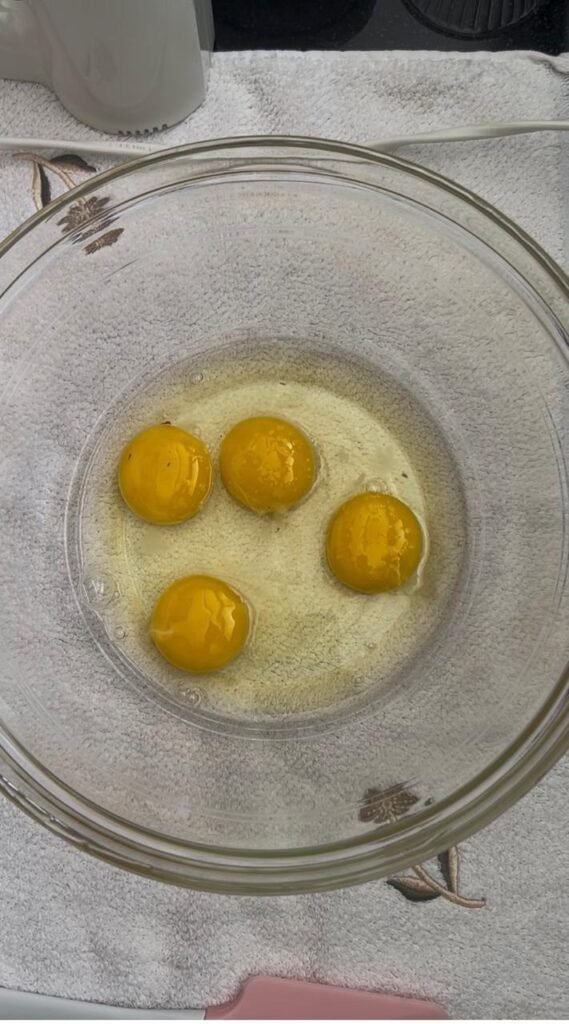
Whip the base. Beat the eggs and sugar with an electric mixer until the mixture is pale, thick, and fluffy. This step builds all the air that makes the cake rise tall, so don’t cut it short.
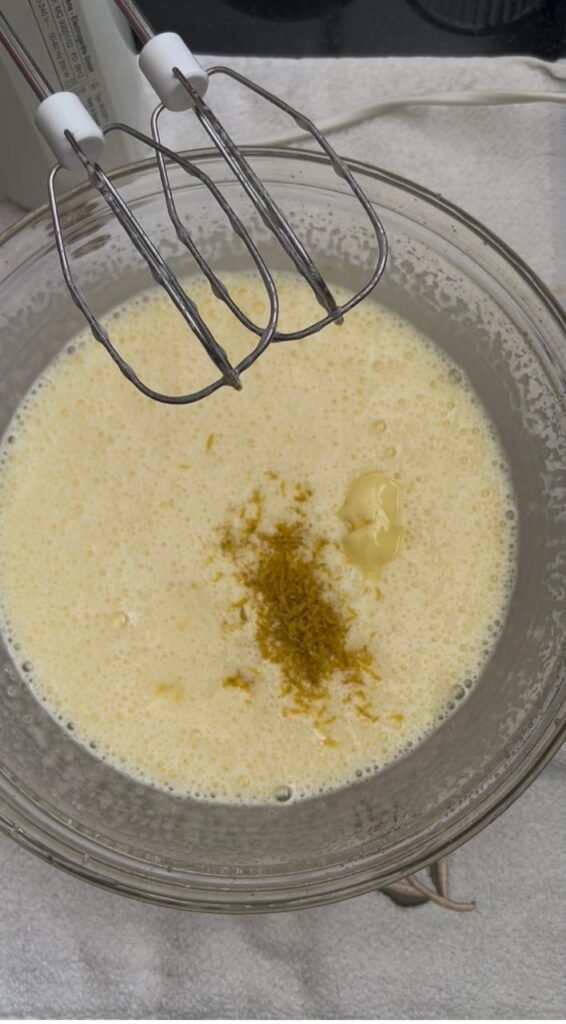
Add the fats and aromatics. Mix in a pinch of salt, vanilla sugar, softened butter, oil, and lemon zest. Keep beating until smooth – the batter should look glossy.
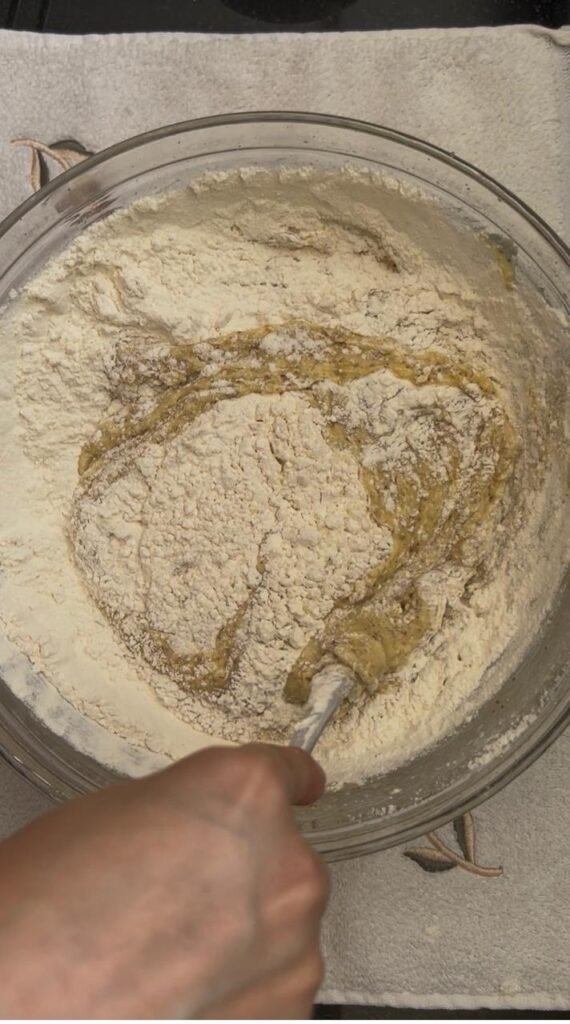
Fold in the almonds and yogurt. Gently fold in the ground almonds with a spatula, then the yogurt. Folding (not beating) here protects the air you just whipped in.
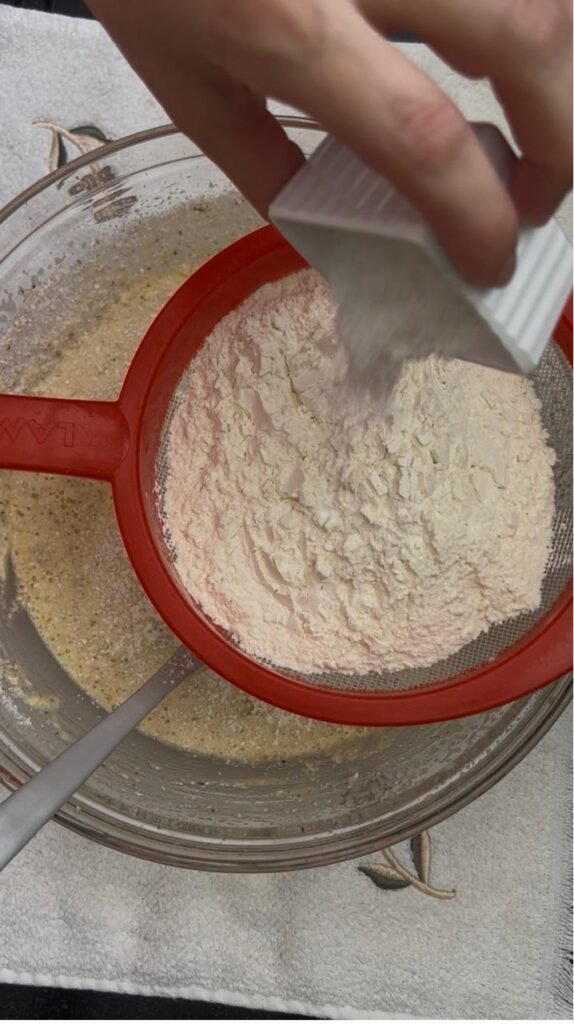
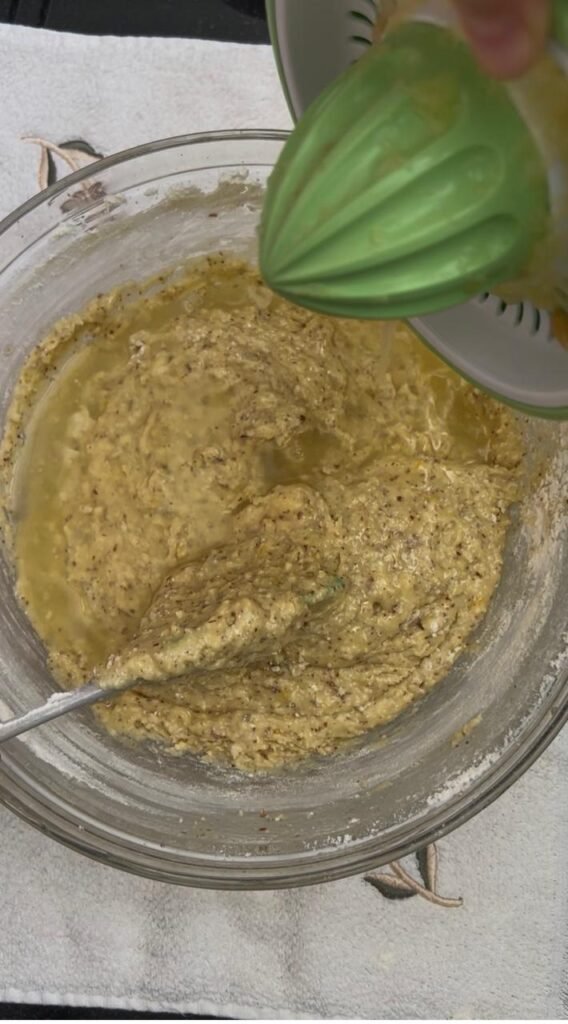
Sift and combine. Sift the flour and baking powder straight over the bowl and fold in gradually. Sifting prevents lumps and keeps the crumb light. Add the lemon juice at the very end for flavor and lift.
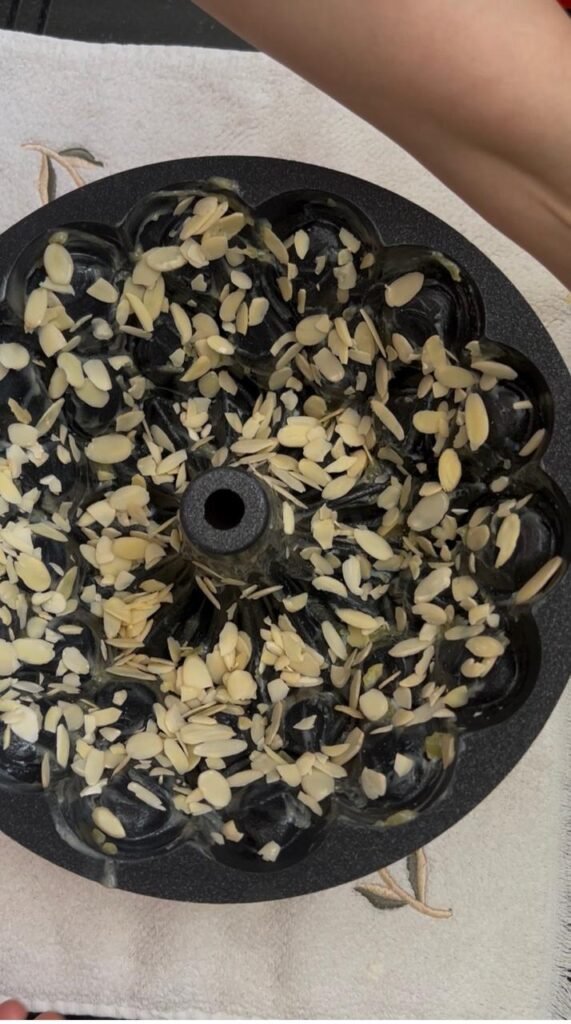
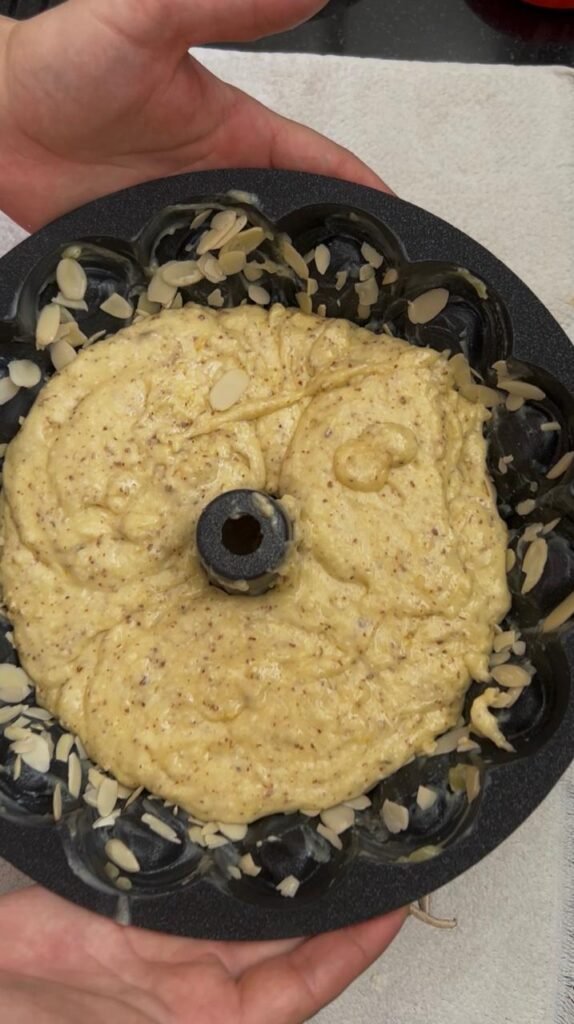
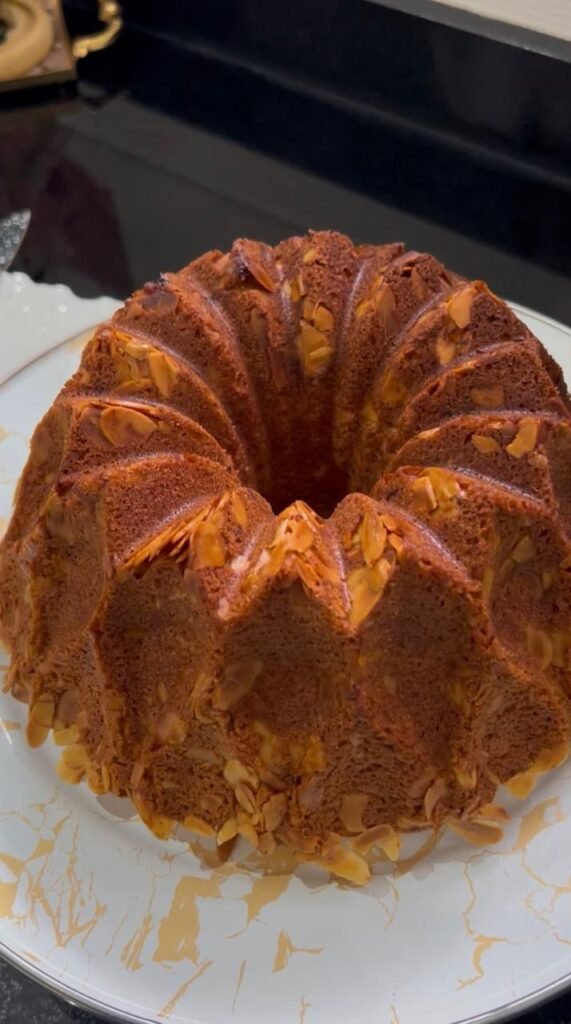
Prep the pan and bake. Scatter the almond flakes across the bottom of a greased Bundt pan (see photo), then pour in the batter. When it bakes and you flip it out, those almonds become a toasted golden crown. Dust with powdered sugar once unmolded.
My Top Tips
- Room-temperature eggs whip up higher and faster than cold ones.
- Don’t overmix once the flour is in. Overworking develops gluten and makes the cake tough. Fold just until combined.
- Grease the Bundt pan well and into every groove – a stuck cake ruins the shape.
- Check doneness with a skewer in the thickest part; it should come out clean with a few moist crumbs.
Common Problems & Fixes
Why did my almond cake turn out dense?
The eggs and sugar probably weren’t whipped enough, or the batter was overmixed after adding flour. Whip until pale and tripled, then fold gently just until the flour disappears.
Why did my cake sink in the middle?
This usually means it was underbaked or the oven door opened too early. Bake until a skewer comes out clean, and avoid opening the oven in the first two-thirds of baking.
Why did my cake stick to the Bundt pan?
Bundt pans have detailed grooves that trap batter. Grease every crevice thoroughly (and flour it if needed), and let the cake cool about 10 minutes before flipping, not longer.
Can I taste the baking powder?
A metallic aftertaste means too much was used. Measure the 14g precisely, and make sure it’s sifted evenly so it’s not concentrated in one spot.
Storage & Make-Ahead
This almond cake keeps beautifully. Store it covered at room temperature for up to 3 days, the oil keeps it moist far longer than an all-butter cake. It freezes well too: wrap slices tightly and freeze for up to 2 months, then thaw at room temperature. It’s a great make-ahead when I know a busy week is coming and I want something ready for the kids after school.
FAQ
What makes an almond cake fluffy?
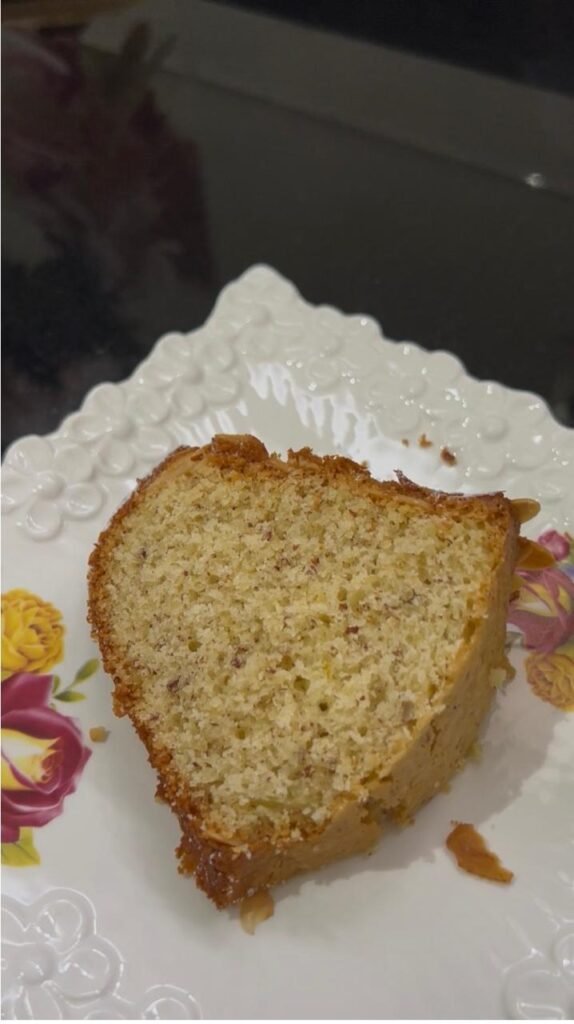
Fluffiness comes from whipping the eggs and sugar until pale and tripled in volume, which traps air. Folding in the dry ingredients gently keeps that air intact, so the cake rises tall and light instead of dense.
Can I use almond flour instead of ground almonds?
Yes. Almond flour and finely ground almonds are essentially the same thing and work interchangeably here. Both give the cake its moist texture and nutty flavor. Avoid coarsely chopped almonds, which change the crumb.
Do I need a Bundt pan for almond cake?
A Bundt pan gives the classic ring shape and even baking, but you can use a round or loaf pan. Adjust baking time as needed and check with a skewer, since different pans bake at slightly different rates.
Why add lemon to an almond cake?
Lemon zest and juice brighten the flavor and balance the richness of the almonds and butter. The acidity also reacts with the baking powder to help the cake rise, giving it a lighter texture.
This almond cake recipe has become one of those bakes I keep coming back to – simple, soft, and always a hit at my table. If you try it, take a look at my Venezuelan Flan for another crowd-pleasing dessert, and you can watch exactly how I make this cake in my short video. Happy baking from my kitchen to yours.

Fluffy Almond Cake
Ingredients
Method
- In a large bowl, beat the eggs and sugar with an electric mixer until pale, thick, and fluffy.
- Add a pinch of salt, the vanilla sugar, softened butter, oil, and lemon zest. Continue beating until smooth and glossy.
- Gently fold in the ground almonds with a spatula, then fold in the yogurt.
- Sift the flour and baking powder directly over the bowl and fold in gradually until just combined.
- Add the lemon juice at the end and mix until the batter is smooth and homogeneous.
- Grease a Bundt pan and scatter the sliced almonds across the bottom. Pour the batter over the almonds.
- Bake at 350°F (180°C) for about 40-45 minutes, until a skewer comes out clean.
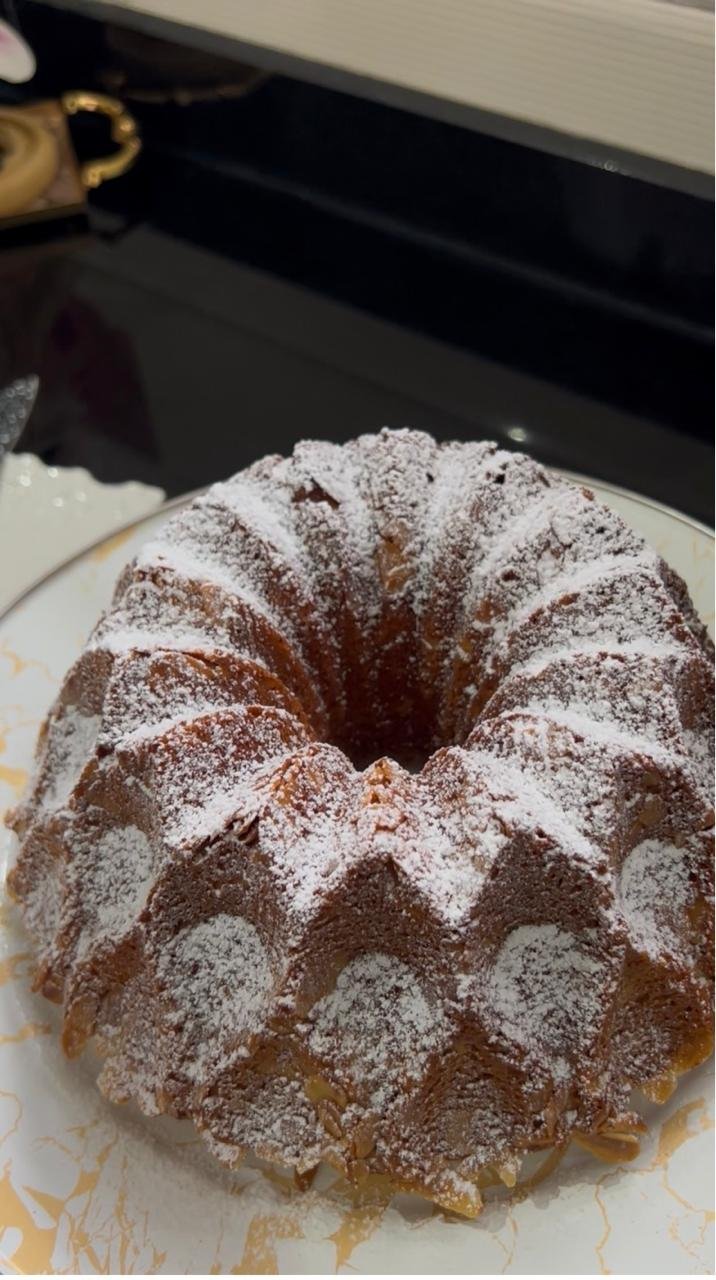
- Let cool about 10 minutes, then unmold. Dust with powdered sugar before serving.